
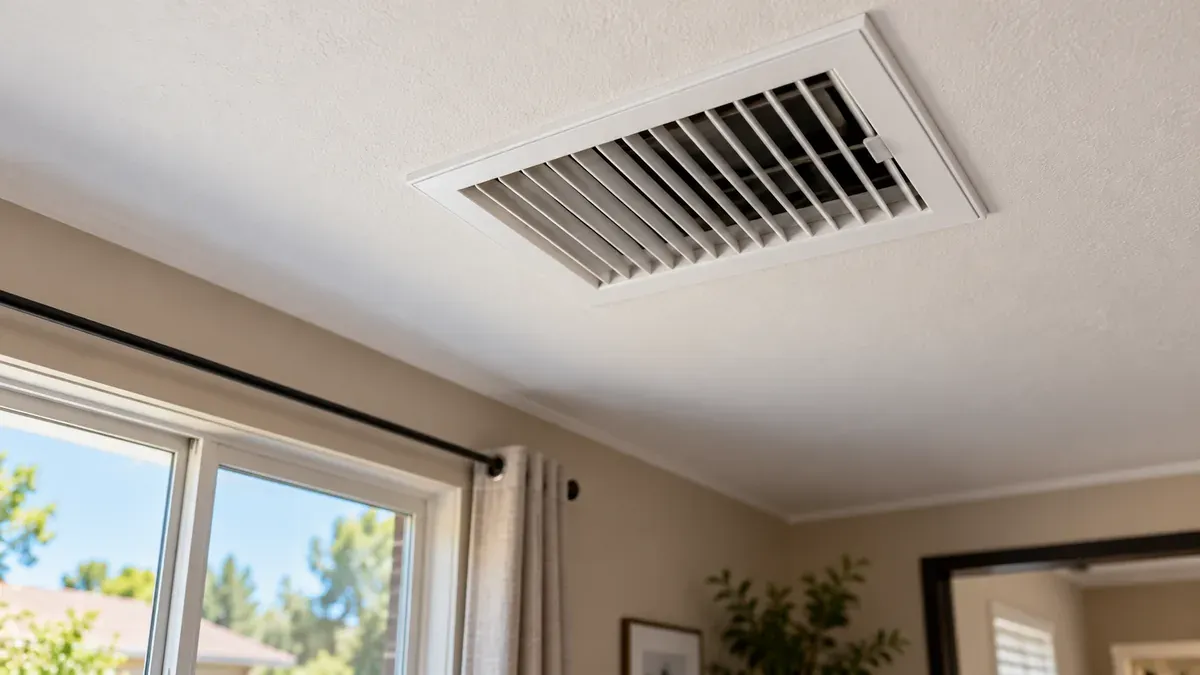
An AC blowing warm air is still moving air just fine, but the cooling part of the job isn’t happening. Somewhere between the return grille and your vents, heat isn’t being pulled out of the air, and when and where you notice it usually tells you why.
It’s worth paying attention for a few minutes before you start checking equipment. Air that’s warm only when the system first kicks on, warm in one back bedroom but nowhere else, or fine at breakfast and warm by late afternoon each points to a different problem, and the first of those usually isn’t a problem at all.
Warm at First, Cool a Minute Later
That first warm blast usually comes from the attic. A lot of San Antonio homes have their ductwork running through the attic, where summer temperatures can climb past 120 degrees, so the air sitting in those ducts between cycles heats up. When the system turns back on, that hot air gets pushed out of the vents ahead of the cold air behind it.
The vents should start blowing cool within a couple of minutes. If the air is still warm after five minutes or so, the attic isn’t the whole story, and one of the sections below is probably a better fit.
It’s also worth noticing whether that warm blast at startup seems to last a little longer each summer. If it does, the duct insulation may be sagging, torn, or missing in places, and it’s a good idea to have it looked at before next July.
Some Rooms Get Warm Air, Others Don’t
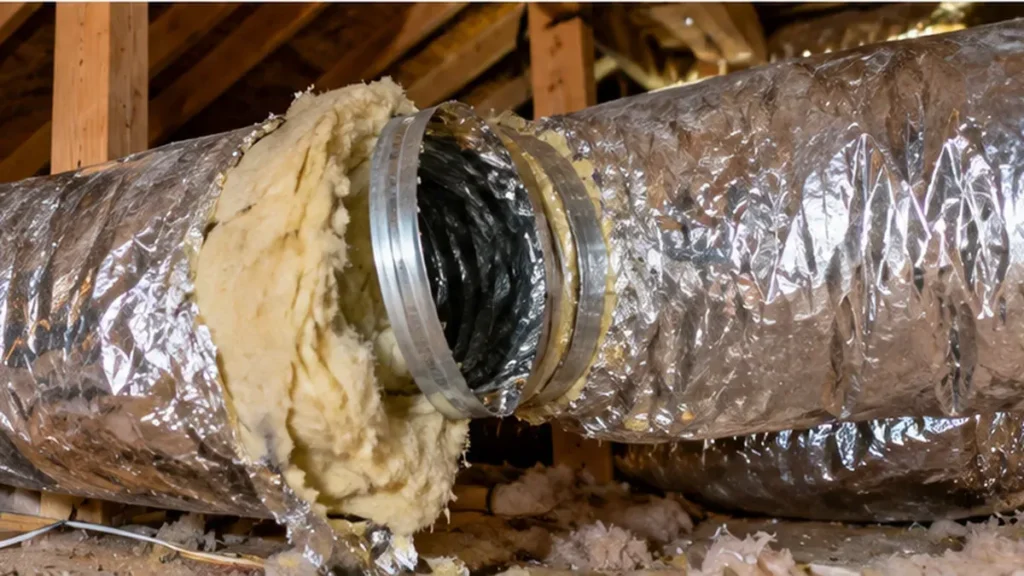
If the living room vent is cold and the back bedroom vent isn’t, the duct between them is a more likely suspect than the AC itself. Flex duct in an attic gets stepped on, kinked around rafters, and sometimes slides right off its collar, which means the cold air you’re paying for ends up cooling the attic instead of the room. A run that has lost its insulation causes a milder version of the same thing: the air still arrives, but it picks up heat along the way.
Leaks on the return side are harder to spot. A gap in a return duct, or in the platform box the air handler sits on, lets the system pull hot attic air in along with the air from your house. Instead of one bad vent, you get every vent blowing air that’s a few degrees warmer than it should be, and the house falls a little further behind each afternoon.
A kitchen thermometer carried from vent to vent will usually show the pattern, and the rooms farthest from the air handler tend to show it first. Because the fix is in the ductwork, it makes sense to look into repairing the ducts before anyone quotes you a bigger system.
Warm From Every Vent, No Matter How Long It Runs
In that case, head out to the condenser while the thermostat is calling for cooling. You won’t need to open anything, since the two most useful checks only take your ears and one hand.
Listen for the Compressor
The fan on top of the unit is the part most people watch, but the compressor is what actually cools the house. When it’s running, you’ll hear a low, steady hum underneath the sound of the fan.
Next, find the two copper lines that run from the unit into the house. The larger one is wrapped in black foam insulation, and after the system has been running for 10 to 15 minutes, it should feel cold to the touch. On a muggy day, it will often be sweating.
If the fan is spinning but that line is warm, the compressor probably isn’t running. A common cause is a failing dual capacitor, a single part that helps start both the fan and the compressor. Because it can fail on the compressor side while the fan keeps turning normally, a spinning fan doesn’t prove as much as most people assume.
Plenty of YouTube videos make swapping a capacitor look like a ten-minute job, but we’d strongly recommend against it. A capacitor can hold enough charge to hurt you even after the power is off, and one that keeps failing is often a sign that the compressor behind it is in trouble. An AC repair technician can test both.
Compressor Running, Line Still Not Cold
If you can hear the compressor but the large line still isn’t cold, the system is probably low on refrigerant, which means there’s a leak. Refrigerant doesn’t get used up the way gas does in a car, and most leaks are slow, so the warm air tends to creep in over several weeks rather than appearing overnight.
If someone recharged the system last summer and it’s blowing warm again, the leak was likely never found, and another recharge will only buy a little more time.
Cold in the Morning, Warm by Late Afternoon
This is different from a house that runs a degree or two behind the thermostat on a 100-degree day. In this case, the air coming out of the vents actually turns warm around mid-afternoon and then comes back cold after dinner.
That usually means the outdoor unit can’t get rid of heat fast enough once it’s baking outside. A coil caked with dust and grass clippings, a fan motor that slows down as it heats up, or a capacitor that’s weak but not completely dead can each push the compressor hard enough to trip its internal overload. The compressor shuts off to protect itself while the indoor blower keeps running, so you get warm air until the compressor cools down and restarts, and the same thing happens again the next afternoon.
It helps to jot down when it happens, because a note like “warm from about 3 to 6” sends a technician straight to the outdoor unit. Coil condition is one of the things we check on an AC maintenance visit, and a clean coil goes a long way here.
A Heat Pump Blowing Warm Air in Cool Mode
Heat pumps handle both cooling and heating with the same equipment, using a reversing valve to change the direction the refrigerant flows. If that valve sticks, or never receives the signal to switch, the system can end up heating your house while the thermostat is set to Cool.
Before blaming the valve, check the thermostat. In October, a thermostat left on Auto can switch to heat on its own after a chilly morning. If the problem started right after a new smart thermostat was installed, the setup is worth a second look, since heat pump thermostats have to be told whether the reversing valve switches on for cooling or for heating (usually labeled O or B in the installer settings). When that setting is backward, the system heats whenever you ask it to cool. If the setting is correct and the air is still warm, the valve or its control will need a technician.
Warm Air After Recent Work
If you’ve had a repair, a recharge, or a new system installed recently, that work is the first place to look. A wire that wasn’t fully tightened, a refrigerant charge that’s off, or a service valve on a new install that was never fully opened tends to show up within days, and problems like these are usually covered, so call whoever did the work first.
If that was us, just call the same number, and we’ll put your warranty call ahead of new jobs on the schedule.
Should You Keep It Running?
Turn the thermostat to Off if the outdoor unit hums but the fan won’t turn, if the big copper line is warm while the compressor sounds like it’s trying, or if anything smells hot. Running the fan by itself won’t hurt anything, but making a struggling compressor keep at it can turn a small repair into a much bigger one.
Getting It Fixed
Texas Air Repair has been fixing air conditioners around San Antonio since 2010, and we’re still family-owned. Our technicians are EPA 608 certified and trained in-house. That training matters on a warm-air call, because this is where expensive mistakes tend to happen, like a bad capacitor being mistaken for a dead compressor or a duct leak getting blamed on the equipment.
We’ll walk you through what we found and quote the repair before we start. If the compressor really has failed and a new system makes more sense, same-day or next-day installation is sometimes possible, depending on equipment and scheduling.
If the house is heating up quickly, call 210-380-8000 for emergency AC repair. If it can wait, you can book a service visit online.