
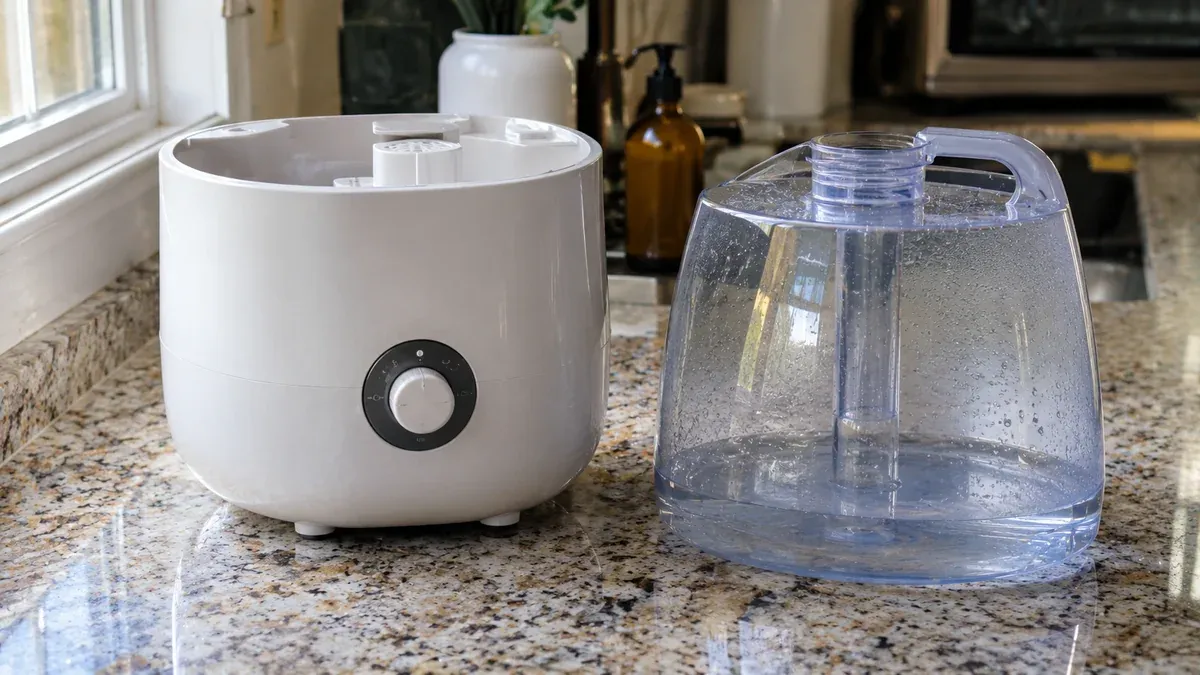
The best thing to put in a humidifier to prevent mold is clean, low-mineral water, and nothing else unless your manufacturer says so. Mold grows where water sits, so the protection comes from emptying and drying the tank every day, cleaning it every few days, and keeping your home’s humidity under 50 percent.
A humidifier is only one source of moisture in a home. If a musty smell is coming from your vents instead of the unit itself, the cooling system is the better place to look, and regular AC maintenance or an air duct cleaning inspection can help track it down. Here’s how to keep the humidifier itself clean.
What to Put in a Humidifier
Water is the only thing a humidifier needs. What matters is which water you use. Tap water carries minerals that build up as scale inside the tank, and scale gives bacteria and mold a rough surface to grow on. In ultrasonic and cool mist models, those minerals can also be blown into the room as a fine white dust.
Distilled water is the best choice because it has the lowest mineral content of the bottled options. Water labeled spring, artesian, or mineral hasn’t been treated to remove minerals, so it doesn’t help. If your humidifier came with a demineralization cartridge or filter, use it as directed and replace it on schedule.
Skip the additives unless your manual specifically allows them. Essential oils, tablets and home remedies aren’t a substitute for cleaning, and some can damage plastic parts or leave residue in the tank. Cleaning on a schedule does far more to stop mold than anything you can pour in.
Empty, Dry, and Refill Every Day
Standing water is what lets mold and bacteria multiply, so a tank that’s topped off for days at a time is the most common cause of a moldy humidifier. For a portable unit, unplug it, empty the tank, wipe every surface dry, and refill with fresh water daily. Don’t just add water on top of what’s left from yesterday.
Clean It Every Third Day
A daily rinse doesn’t remove the film and scale that build up on the inside. Every third day, give a portable humidifier a full cleaning:
- Unplug the unit and empty the tank and base.
- Scrub away any scale, deposits, or film on the tank and interior surfaces with a soft brush.
- Disinfect the parts that touch water. Follow your manufacturer’s instructions first. If the manual doesn’t say, a 3 percent hydrogen peroxide solution is a common choice.
- Rinse the tank thoroughly with several changes of water so no cleaning product is left to be blown into the air.
- Wipe everything dry, reassemble, and refill with distilled water.
Follow the manual for filters, wicks, and cartridges too, because those need replacing on the manufacturer’s schedule and can hold moisture if they’re left in too long.
Keep Your Home’s Humidity Under 50 Percent
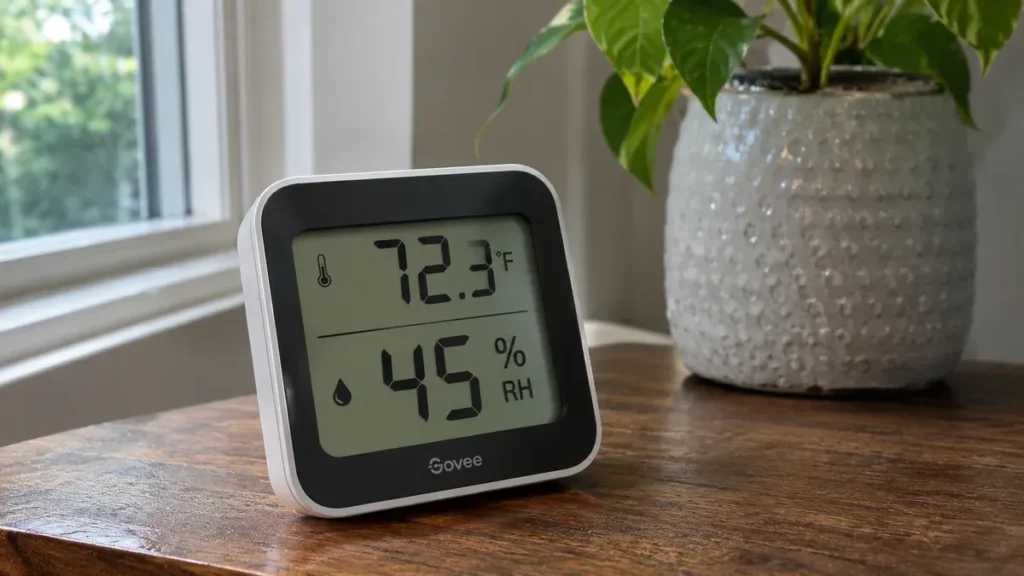
Even a perfectly clean humidifier can cause mold if it pushes the air too damp. The EPA advises against humidifying above 50 percent relative humidity, and most health sources put the comfortable range at 30 to 50 percent. An inexpensive hygrometer from a hardware store tells you where your home actually sits, and many humidifiers have a built-in humidistat you can set to match.
Watch for condensation on windows, walls or picture frames. If you see it, lower the humidistat, turn the output down, or run the unit only part of the day. Keep the humidifier on a hard, flat surface, and make sure carpet, curtains and tablecloths near it never get damp.
Signs There’s Already Mold in Your Humidifier
Look inside the tank and base each time you clean. Dark, pink or green specks, a slimy film, or a musty smell when the unit runs all mean growth has started. Don’t just top it off. Stop using the unit, clean and disinfect it as described above, and replace any filter or cartridge. If it keeps coming back or the plastic is stained and stays smelly, replacing a cheap portable unit is often easier than fighting it.
Ultrasonic and cool mist humidifiers deserve the most care, because they can disperse microorganisms and minerals from the tank into your air. If anyone in your home develops breathing symptoms that seem tied to the humidifier, stop using it and talk to a doctor.
Before You Put It Away for the Season
When you’re done with the humidifier for the year, clean it one more time, throw out any used filters or cartridges, and make sure every part is completely dry before storing it somewhere dry. Clean it again when you take it out next season, and wipe the dust off the outside.
When the Problem Is Bigger Than the Humidifier
If you keep your humidifier clean and still notice musty odors, damp spots near vents, or humidity that stays high even when the humidifier is off, the moisture is probably coming from somewhere else. A clogged condensate drain, ductwork that’s gathering moisture, or an air conditioner that isn’t running properly can all add to the problem. If you have a whole-house humidifier attached to your heating system, ask your HVAC technician to check it during a maintenance visit, since those units need regular care too.
If your AC has stopped cooling the way it should, our AC repair team can diagnose it. Texas Air Repair is a local, family-owned HVAC contractor that has served San Antonio and the surrounding communities since 2010.
Call 210-380-8000 or book service online, and we’ll take a look.
