
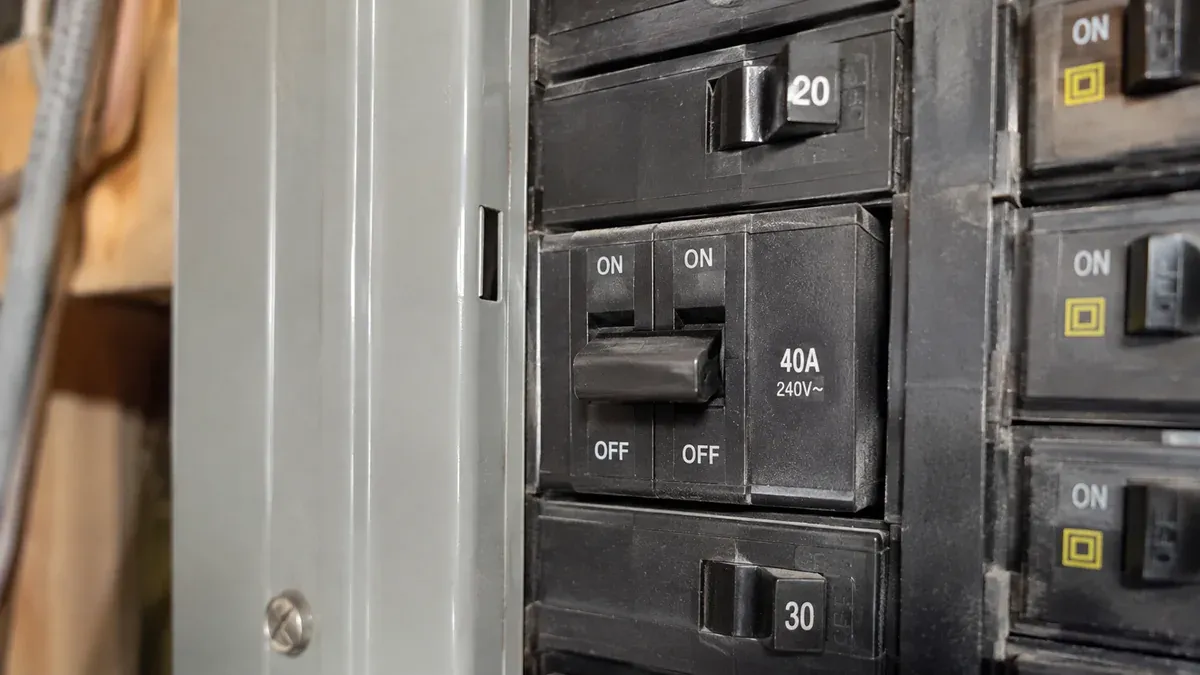
When an AC keeps tripping the breaker, the system is drawing more electrical current than its circuit is built to handle, and the breaker is shutting it off to prevent overheated wiring or a fire. A single trip after a storm or power flicker can be a one-time event. A breaker that trips again and again means something in the system needs attention, and in some cases it needs emergency AC repair rather than another reset.
Even in November, plenty of San Antonio afternoons still put the AC to work, and a problem that starts now will be waiting for you on the first hot week of spring. The good news is that the timing of the trip, and which breaker is tripping, usually tells you a lot about the cause.
First, Make It Safe
Set the thermostat to Off before you touch the breaker, so the system isn’t trying to start the moment power comes back. Give it a few minutes, then switch the breaker fully off and back on. If it trips again, stop there and leave it off until it’s been checked. Forcing a breaker back on over and over can overheat wiring and damage the compressor.
Don’t reset it at all if you smell burning, see scorch marks on the panel or the outdoor unit’s disconnect box, hear buzzing from the panel, or the breaker feels hot to the touch. Those are signs of an electrical fault that needs a professional right away.
Which Breaker Is Tripping?
Central air systems usually have two circuits. The outdoor unit, with its compressor and fan, is on a larger double breaker. The indoor air handler or furnace, which runs the blower and controls, is on its own breaker. Knowing which one trips narrows things down quickly, since most tripping problems come from the outdoor unit, where the compressor draws the most power.
If you can’t tell which is which from the panel labels, note which breaker is in the off position next time it happens so you can tell the technician.
When It Trips Tells You Why
Right Away, the Moment Power Comes Back
A breaker that won’t stay on even with the thermostat off usually points to a short circuit, such as damaged wiring, a failed contactor, or a compressor whose internal windings have shorted to its housing. This is the pattern most worth leaving alone. Keep the breaker off and have it diagnosed before anything else.
When the AC Tries to Start
If the breaker holds until the thermostat calls for cooling and then trips within a few seconds, the compressor is likely struggling to start. A compressor needs a big surge of current to get going, and a weak capacitor can’t give it the boost it needs. The compressor stalls, current spikes, and the breaker trips. You may hear a hum or a loud click from the outdoor unit just before it happens.
A capacitor is a relatively simple part for an AC repair technician to test and replace. If the capacitor checks out, the compressor itself may be wearing out, and a technician can measure how much current it pulls on startup to tell the difference. On some older compressors, a hard-start kit can help, but it’s a temporary measure rather than a cure.
After It’s Been Running a While
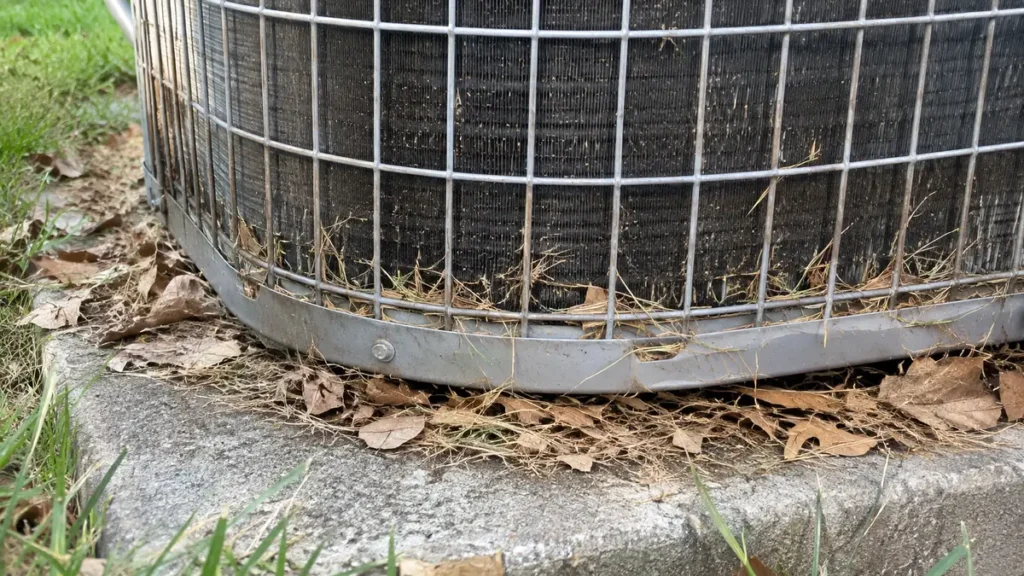
Trips that come only after a long stretch of running, often on the warmest part of the day, usually mean the outdoor unit is overheating and pulling more current as it works harder. A condenser coil packed with dirt or grass clippings, a fan motor that’s slowing down, or a unit hemmed in by plants can all cause it. Inside, a badly clogged filter can make things worse by restricting airflow across the indoor coil.
Randomly, or After Rain or Storms
Trips that don’t follow a clear pattern often come down to the electrical connections. Wires can loosen or corrode at the disconnect box or contactor over time, and water getting into an outdoor disconnect can cause trips after heavy rain. Lightning and power surges can also damage control boards and other components.
Sometimes It’s the Breaker
Breakers wear out, especially after years of tripping and being reset. A weak breaker can trip below its rating even when the AC is drawing a normal amount of current. A technician can measure the system’s actual current draw and compare it to the breaker’s rating. If the AC is pulling a normal load and the breaker still trips, the breaker or panel wiring is likely the issue, which calls for a licensed electrician.
What You Can Safely Check
Before calling, it’s worth replacing the air filter if it’s dirty and making sure plants, leaves and stored items aren’t crowding the outdoor unit. Those two steps address the airflow side of the problem. Leave the electrical parts alone. The outdoor unit runs on 240-volt power, and its capacitor can stay dangerously charged after the power is cut.
Getting It Diagnosed
If the breaker keeps tripping after those checks, it’s time for a professional diagnosis. Our technicians test the capacitor, contactor, and wiring, and measure the compressor’s current draw so we can tell you whether the problem is in the AC, the circuit, or both. You’ll see what we find and get the repair price before any work starts.
Our family business, Texas Air Repair, has kept San Antonio air conditioners running since 2010. If the diagnosis points to a failing compressor on an older system, we’ll walk you through whether a repair or a replacement makes more sense. Call 210-380-8000 or schedule service online.
