
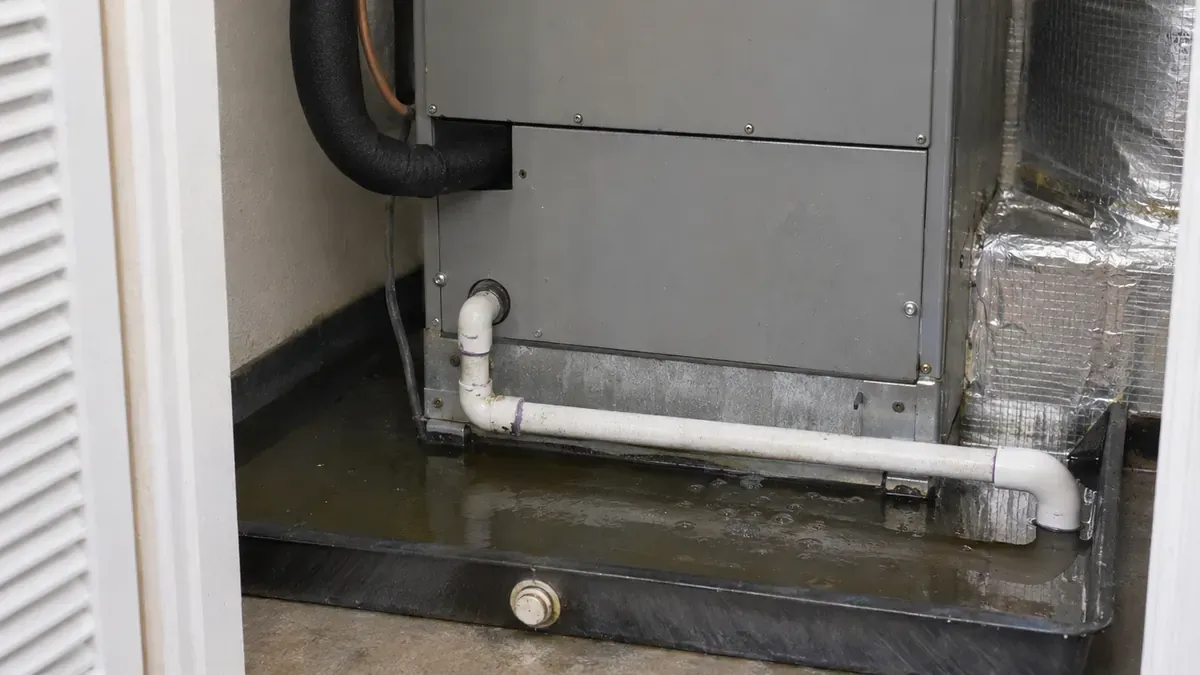
A clogged AC drain line usually announces itself in one of a few ways: a drip from a small pipe on the outside of your house, an AC that keeps shutting itself off, water in the pan under the indoor unit, or a musty smell near the equipment. Catching it at that stage is easy and inexpensive. Waiting until water shows up on a ceiling is not.
Knowing how your drain system is set up makes the signs much easier to read. Below is a quick look at how it works, what each warning sign means, and what you can safely do yourself before calling an HVAC company to repair your system.
How Your AC’s Drain System Works
As your AC cools, moisture from the air condenses on the indoor coil and drips into a pan built into the unit. From there, it flows into the main drain line, usually a white PVC pipe, which carries it outside or into a plumbing drain. Most lines include a trap, a U-shaped bend that keeps air from being pulled back up the pipe, and many have a capped tee near the unit that serves as an access point for cleaning.
Attic installations, which are common around San Antonio, usually add a backup. A larger pan sits under the whole unit, and it has either its own secondary drain line or a float switch. Secondary lines are typically routed to a spot you’ll notice, such as over a window or under an eave, so a drip there tells you the main line isn’t keeping up. A float switch does the job differently by shutting the system off when water rises in the pan.
Signs the Drain Line Is Clogged
Water Dripping Where It Shouldn’t
A steady drip from the secondary drain outlet is the clearest sign there is. It means water is filling the backup pan instead of leaving through the main line. Many homeowners don’t know what that pipe is for, so it’s worth finding it on your house now, while things are working.
The AC Shuts Off on Its Own
If your system has a float switch, a clogged line will eventually trip it and stop the AC. This often happens on humid days, when the system is producing the most water. The thermostat may still show it calling for cooling, but nothing runs until the water drains.
No Water at the Outside End
On a warm day with the AC running, the main drain line should drip steadily where it ends outside. If that outlet stays dry after a good stretch of cooling, the water is getting stuck somewhere along the way.
Standing Water, Musty Smells or Stains
Water sitting in the pan under the indoor unit, a musty or mildew smell near the equipment, or a water stain spreading on the ceiling below an attic unit all suggest a line that’s slow or blocked.
What Clogs an AC Drain Line
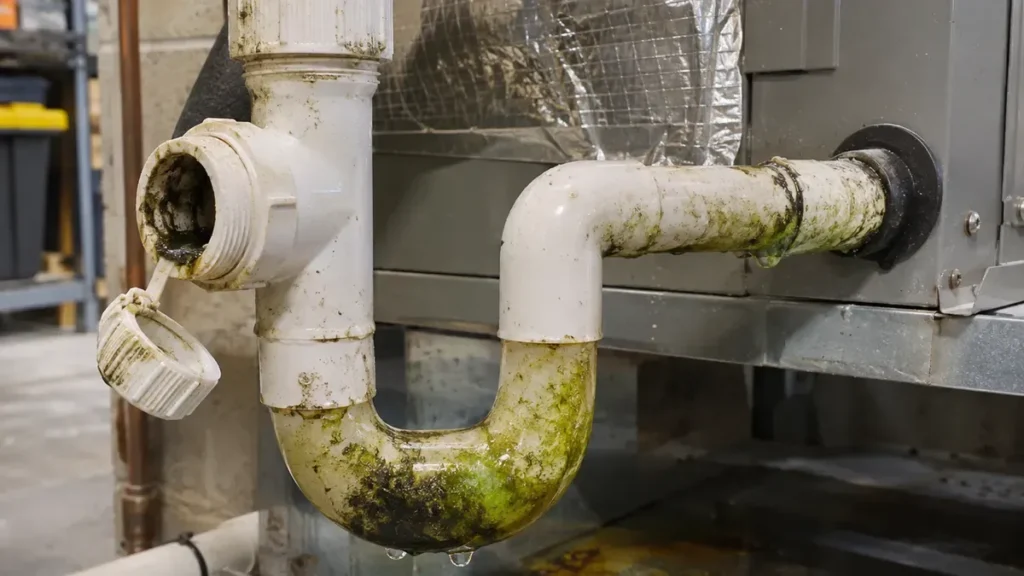
The usual culprit is a slimy buildup of algae, mold, and bacteria that grows in the warm, damp line, mixed with dust that washes off the coil. Attic heat and long cooling seasons give that growth plenty of time to build up, which is why the drain gets checked on a seasonal tune-up. Other causes include insects or mud dauber nests in the outdoor end of the line, a sagging section of pipe where water and sludge collect, and a failed condensate pump on systems that use one.
How to Clear a Simple Clog
If the clog is near the outside end, you can often clear it yourself:
- Cut the power by setting the thermostat to Off and flipping the switch next to the air handler.
- Clear the outlet. Find where the main drain line ends outside, pull out any visible debris, then hold a wet/dry vacuum tightly over the end for a minute or two to pull the clog out.
- Flush the line. Remove the cap on the access tee near the indoor unit and slowly pour in about a cup of distilled white vinegar, which Carrier suggests for loosening buildup. Wait about half an hour, then follow it with water and check that it flows freely out the other end.
- Check the pans. If there’s water in the backup pan, soak it up so it doesn’t trip the float switch again, and look for rust or cracks.
Never mix vinegar and bleach, or flush one right after the other, since the combination releases toxic chlorine gas. Avoid harsh drain cleaners as well, because they can damage the pan and the line.
When to Call a Technician
Call for service if you can’t clear the clog from the outside end, the line clogs again within a few weeks, water has reached the ceiling, the pan is rusted or cracked, or the system keeps shutting off even after the line flows. A line that clogs repeatedly may have a sag, a poorly placed trap, or a slope problem that needs to be corrected rather than flushed again.
The best time to deal with a drain is before it clogs. Having the drain and pans checked on a maintenance visit is one of the simplest ways to avoid a ceiling repair down the road. Late fall and winter, when the AC isn’t running much, is a convenient time to have it done.
Our family has run Texas Air Repair in San Antonio since 2010, and we’re glad to take a look. Call 210-380-8000 or schedule a visit online.
