
A heat pump blowing cold air in heat mode isn’t always broken. Heat pumps deliver air that’s noticeably cooler than a furnace’s, and on chilly, damp mornings they briefly stop heating to clear frost off the outdoor unit. Both are normal, and both can make the air at the vents feel cold for a while.
When the air stays cold, though, something isn’t working the way it should. The sections below explain what’s normal, how to tell when it isn’t, and which problems call for heating repair.
Why Heat Pump Air Can Feel Cool Even When It’s Working
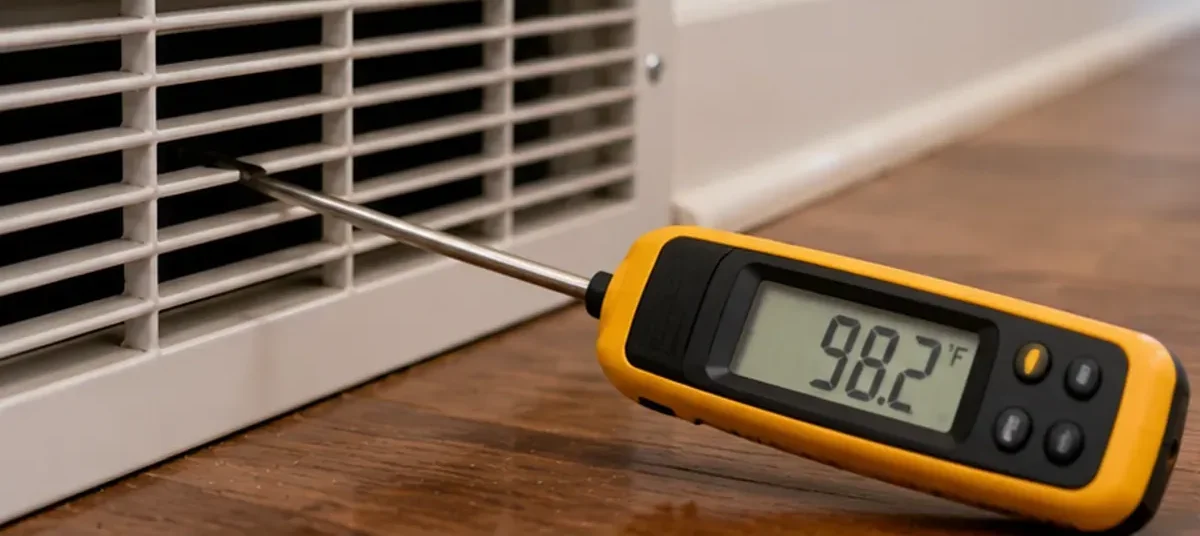
A gas furnace usually sends air out of the vents at well over 100 degrees. A heat pump in good working order typically puts out air in the range of about 90 to 110 degrees, depending on the outdoor temperature and the system. That’s warm enough to heat the house, but since your skin is around 90 degrees, air in that range moving across your hand can feel cool, especially near a vent with a strong draft.
To check whether yours is heating, let the system heat for 10 or 15 minutes, then hold a kitchen thermometer in the airflow at a supply vent. If it reads in the 90s or higher and the house is slowly warming, the heat pump is likely doing its job. If the air is close to room temperature, or the house keeps losing ground, something else is going on.
The Defrost Cycle
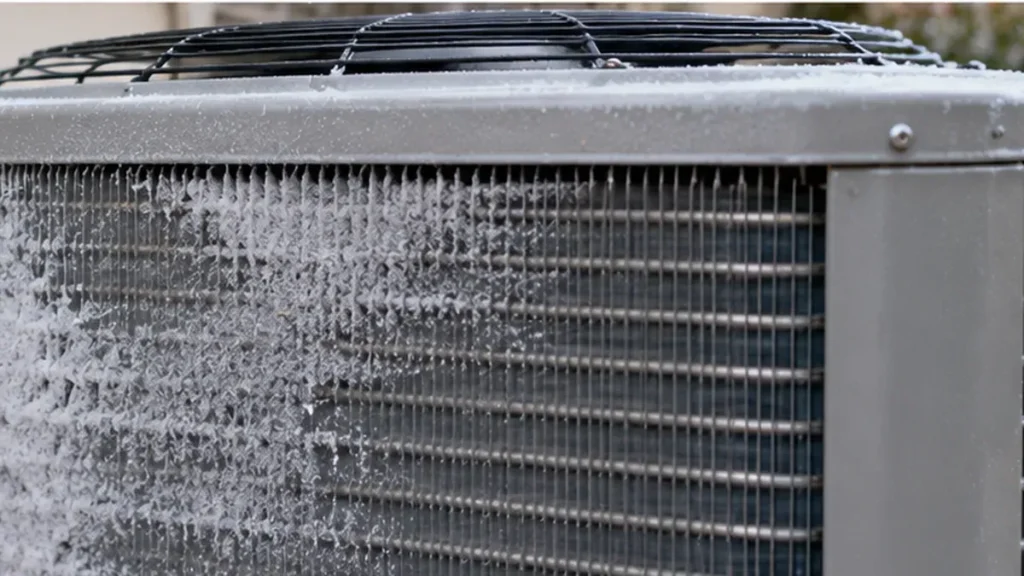
In heat mode, the outdoor coil pulls heat from the outside air, and that coil runs colder than the air around it. When it’s chilly and humid, which describes a lot of winter mornings around San Antonio, frost builds up on the coil. To clear it, the heat pump periodically switches into defrost, briefly running in reverse to warm the outdoor coil.
You can usually tell when it’s happening. The fan on top of the outdoor unit stops, you may hear a whoosh as the system switches over, and steam may rise from the unit. A defrost cycle typically lasts only a few minutes. Many systems turn on their backup heat strips during defrost so the air indoors doesn’t turn cold, but if yours doesn’t, you may feel cool air until the cycle ends and normal heating resumes.
A defrost cycle every so often on a cold, damp morning is normal. An outdoor unit that stays covered in thick ice, or ice that keeps building up and never clears, points to a problem with the defrost controls, the outdoor fan, or the refrigerant charge.
Cold Snaps and Backup Heat
A heat pump’s capacity drops as the outdoor temperature falls. On the coldest nights, it may not be able to keep up by itself, so most systems have backup heat, usually electric heat strips inside the indoor unit, that switch on to help. Your thermostat may show “Aux Heat” when that happens.
If the air turns cool on the coldest nights or during every defrost cycle, the backup heat may not be working. The heat strips often have their own breaker in the electrical panel, so it’s worth checking that first. If the breaker is on, a failed heating element or a control problem may be keeping the strips from coming on, and that’s a job for a technician since those parts carry high voltage.
When the Cold Air Points to a Problem
If the air at the vents stays cool for long stretches and the house won’t warm up, these are the more common causes.
The Outdoor Unit Isn’t Running
Since the outdoor unit is where a heat pump gets its heat, it has to be running for the system to heat. If the indoor blower is moving air while the outdoor unit sits quiet, check the disconnect box on the wall beside it and the breaker in your panel. If both are on, an electrical part in the outdoor unit may have failed. Leave the panels closed and call a technician, since some of those parts can hold a dangerous electrical charge.
Low Refrigerant
A heat pump moves heat with refrigerant, the same way it does in summer. If the system is low, it means there’s a leak, and the heat pump will struggle to pull enough heat from the outdoor air. Signs include lukewarm air, long run times, heavy frost on the outdoor coil and a system that leans on backup heat more than it used to. A leak needs to be found and repaired by a certified technician before the system is recharged.
Restricted Airflow
A clogged filter or a dirty indoor coil cuts down on how much air moves across the coil, and that limits how much heat makes it into the house. Replacing the filter is an easy first step. If the filter is clean and airflow is still weak, the blower or the ductwork may need attention.
Leaky Ductwork in the Attic
In many San Antonio homes, ducts run through the attic, which can be close to the outdoor temperature on a winter night. A leak on the return side can pull that cold attic air into the system, and a supply duct that’s disconnected or poorly insulated loses heat before it reaches the room. Either one can make a properly working heat pump feel like it’s blowing cold air, especially at the vents farthest from the indoor unit.
A Note About Emergency Heat
If your heat pump isn’t keeping up, it can be tempting to switch the thermostat to Emergency Heat. That setting turns off the outdoor unit and heats the house with the backup strips alone. It can get you through a cold night while you wait for a repair, but it uses a lot more electricity than normal heat pump operation, so it’s best treated as a temporary fix rather than a way to run the system.
Getting Your Heat Pump Checked
Call for service if the air stays cool after the system has been running for a while, the outdoor unit isn’t running or stays iced over, the backup heat doesn’t come on, or you find yourself relying on Emergency Heat.
Our family-run team at Texas Air Repair has worked on San Antonio heat pumps since 2010. A visit covers the outdoor unit, defrost operation, backup heat, and refrigerant charge, and you’ll hear what’s wrong and what the fix costs before any work starts. When an older heat pump needs a repair that’s hard to justify, a free estimate on heat pump installation gives you something to compare it against.
Call 210-380-8000, or schedule service online.