
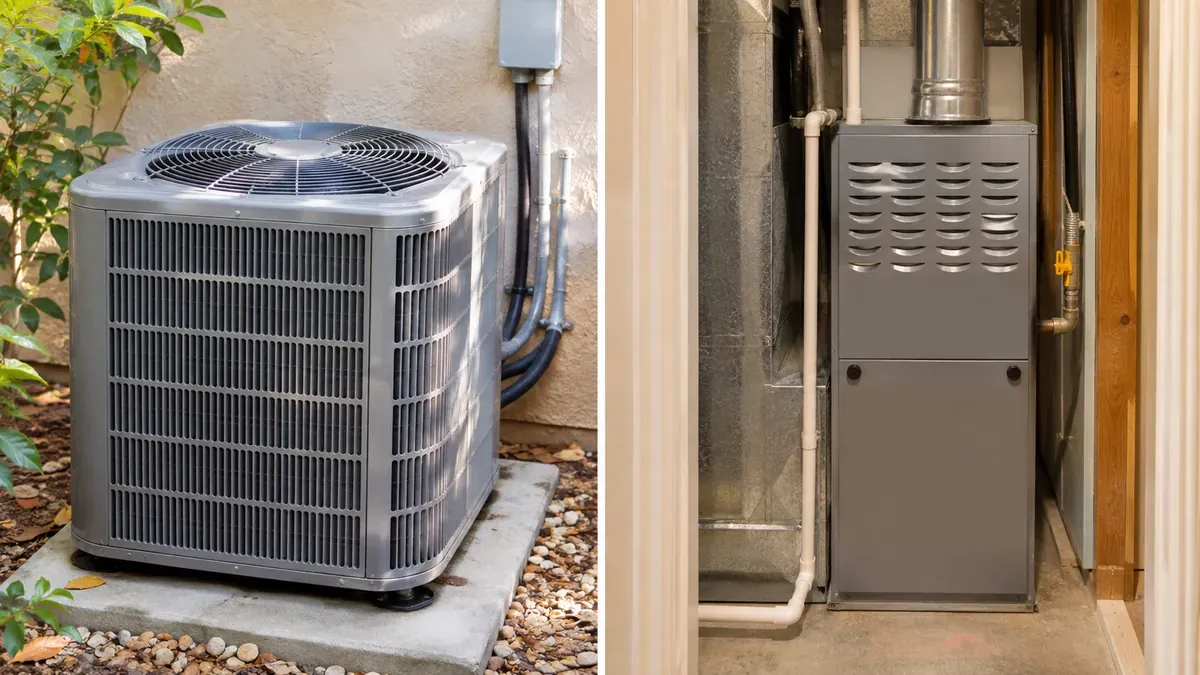
Choosing between a heat pump and a furnace in Texas comes down to a different set of questions than it does up north. San Antonio’s heating season is short and mostly mild, so the furnace’s big advantage, steady heat on bitterly cold days, matters less here, while the heat pump’s ability to cool and heat with one outdoor unit matters more. Even so, a gas furnace is still the right call for some homes.
The answer usually depends on whether your home has natural gas, how old your current equipment is, and how you like your home to feel in winter. Below is how those factors play out, so you know which direction makes sense before comparing estimates for heat pump installation and heating installation.
What You’re Actually Choosing Between
A furnace only heats, so a home with a furnace also has a separate air conditioner outside. A heat pump replaces that air conditioner and handles both jobs, usually paired with an indoor air handler that holds backup electric heat. Our comparison of a heat pump vs. air conditioner explains how a heat pump moves heat instead of making it, so this article focuses on what’s different when the alternative is a gas furnace rather than electric strips.
That framing matters for cost. If your AC and furnace both need replacing, you’re comparing two new systems either way. If only one of them is aging, the answer may be to replace just that one, or to combine the two in a dual-fuel setup.
Running Costs in San Antonio
In San Antonio, CPS Energy supplies both natural gas and electricity, so for homes with gas service the winter bill comes down to how much heat each unit of gas or electricity produces and what those rates are at the time. A heat pump in mild weather gets far more heat from its electricity than a furnace gets from its gas in terms of raw energy, but gas is usually cheaper per unit, which narrows the gap.
In practice, the difference between a modern heat pump and a gas furnace over a typical San Antonio winter is often modest, and which one comes out ahead depends on current rates and the equipment. Because the heating season here is short, winter running costs usually aren’t big enough to decide the question on their own.
The picture changes outside areas with natural gas service. Some homes farther out in the Hill Country heat with propane instead, and propane generally costs more for the same amount of heat. For those homes, a heat pump is often the less expensive way to heat.
How Each One Feels
Comfort is where many homeowners make up their minds. A gas furnace delivers hot air in short bursts, and the vents feel noticeably warm when it’s running. A heat pump delivers air that’s warm rather than hot and tends to run in longer, gentler cycles, which keeps the temperature steady but can feel less cozy at the vent if you’re used to a furnace.
Neither is wrong. If you like that blast of heat on a cold morning, a furnace will feel more familiar. If you’d rather have an even temperature and don’t stand near the vents much, a heat pump’s style of heating usually goes unnoticed.
Is a High-Efficiency Furnace Worth It Here?
Furnaces are rated by AFUE, the share of the gas’s energy that ends up as heat in your home. Standard models are around 80 percent, and high-efficiency condensing furnaces reach the mid-90s. Up north, where a furnace runs for months, that upgrade often pays for itself.
In San Antonio, a furnace may only run for a few weeks’ worth of hours each winter, so the savings from a high-efficiency model add up slowly. Condensing furnaces also need a drain line for the water they produce and different venting, which can add installation cost, especially with the furnace in an attic. It’s worth asking for prices on both levels and comparing how long the difference would take to pay back.
Safety and Maintenance
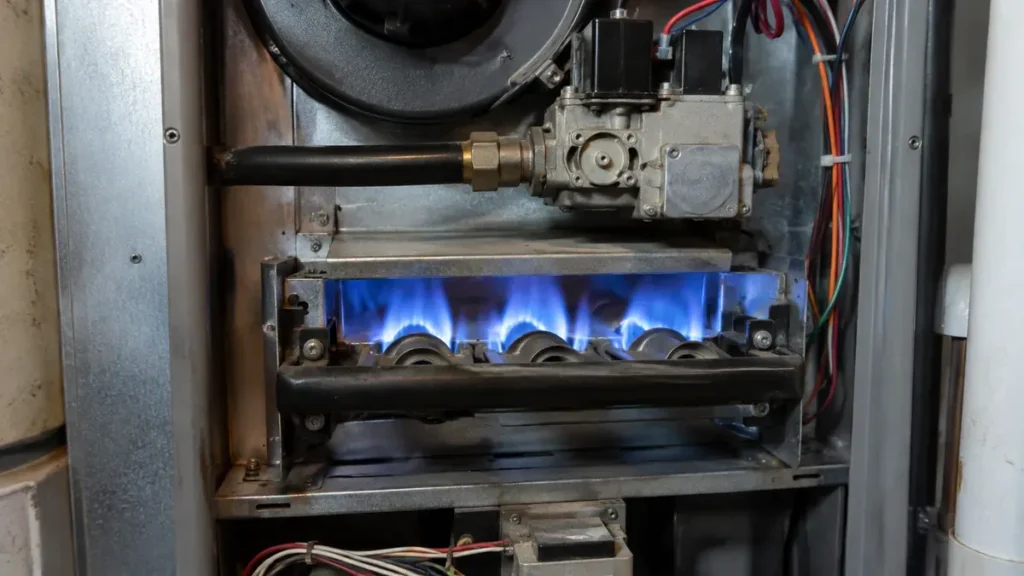
A gas furnace burns fuel inside your home, so its venting, burners, and heat exchanger need regular inspection, and the house needs working carbon monoxide detectors. A heat pump doesn’t burn anything, which removes those concerns entirely, though it still needs its refrigerant system, electrical parts, and outdoor coil kept in good shape.
Furnaces also tend to last longer than heat pumps, since they only run in winter while a heat pump works year-round. That doesn’t make a furnace the better value automatically, but it’s worth factoring in when the furnace you have now is still fairly young.
Dual Fuel: Keeping Both
With dual fuel, a heat pump outside works alongside a gas furnace inside. The heat pump handles cooling all summer and most of the heating, and the furnace takes over only when it gets cold enough that gas is the better option. The switch happens automatically based on outdoor temperature or a setting in the thermostat.
This setup makes the most sense when your furnace still has plenty of life left but your air conditioner needs replacing. Instead of putting in another cooling-only unit, a heat pump gives you efficient heat on mild days and keeps the furnace’s strong heat for the coldest ones.
Which Fits Your Home?
For most homes without natural gas, a heat pump wins out, and the same goes for homes on propane, homes replacing heating and cooling together, and owners who’d rather not have combustion equipment indoors. A gas furnace still makes sense if you have gas service and prefer hotter air from the vents, or if your current furnace is in good shape and only the AC needs attention, in which case dual fuel is worth a look.
Texas Air Repair has installed heating and cooling systems for San Antonio and Hill Country homes since 2010, and an owner evaluates every installation we complete. Our free estimates cover the equipment options, any backup heat, and the installation work in one price, so you can compare a heat pump, a furnace, and dual fuel side by side.
Call 210-380-8000 or book your free estimate online.
