
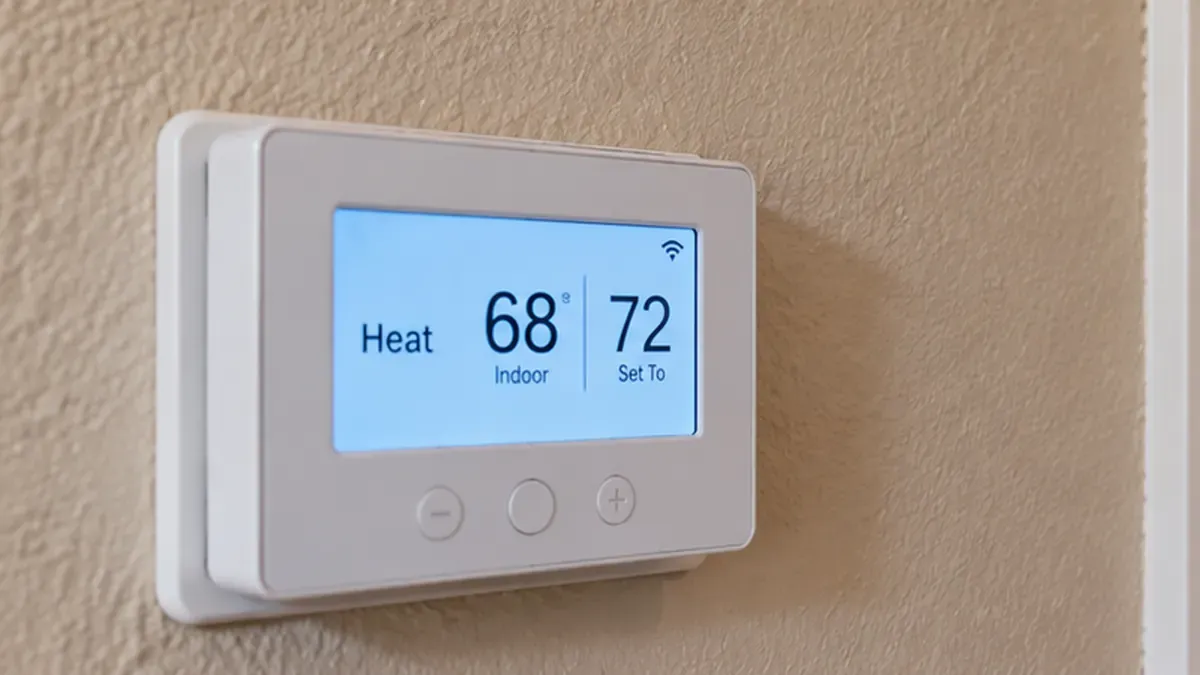
When a heater won’t turn on, the problem is often something simple that keeps the system from getting the signal to start, like a thermostat setting, a tripped breaker, or a switch that got bumped. In San Antonio, where the heat may not have run since early spring, the first cold night of the year is usually when those small issues show up.
The checks below start with the ones that apply to every kind of heating system, then move to what to look for with a gas furnace, electric heat, or a heat pump. If none of them solve it, the last section covers when to stop troubleshooting and call for heating repair.
Start at the Thermostat
Make sure the thermostat is set to Heat, and the temperature is set a few degrees above what the room is now. If the screen is blank or faded, replace the batteries. Some thermostats run on batteries even when they’re wired to the system, and they can stop sending signals to the equipment before the screen goes completely dark.
After a long cooling season, it’s also worth checking for settings left over from summer. A schedule, a vacation hold, or an eco mode can override what you set at the wall, and a thermostat in Auto may be waiting for the house to drop to its own heating setpoint. With a smart thermostat, open its app too, since a setting changed from a phone won’t always be obvious on the screen.
Once you change anything, give the system a few minutes before deciding it isn’t working. Many heaters run through a short startup sequence before warm air reaches the vents.
Check Breakers and Switches
Every heating system has a few places where power can be cut off, and any one of them will keep it from starting. Look in your electrical panel for a tripped breaker labeled for the furnace, air handler, or heat. Homes with electric heat often have two breakers for the indoor unit, one for the blower and controls and a larger one for the heat strips, so check both.
Next, look for a service switch near the indoor unit. It usually looks like an ordinary light switch and is easy to flip off by accident, especially in an attic or closet where things get moved around. Heat pump owners should also check the disconnect box mounted on the wall next to the outdoor unit.
Flipping a tripped breaker back on is fine to try one time. When it won’t stay on, the breaker is doing its job by protecting the system from an electrical fault, so leave it off rather than resetting it over and over.
Look at the Indoor Unit
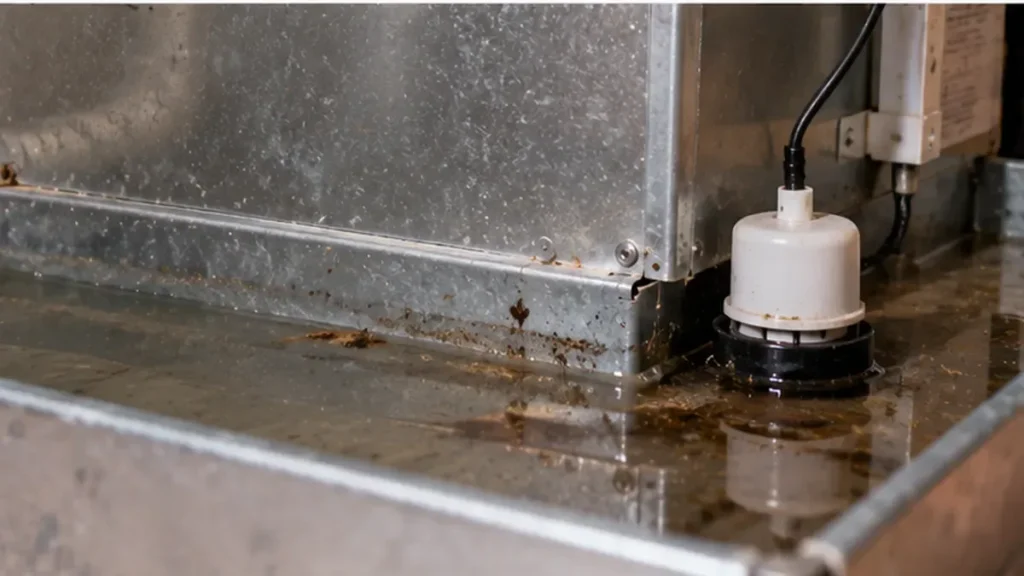
A couple of things at the furnace or air handler itself can stop a heater from starting, even when it has power.
The first is the access panel. Most units have a safety switch behind the front panel that cuts power whenever the panel is off or not fully seated. If someone changed the filter or looked inside recently, make sure the panel is snapped or screwed firmly back into place.
The second is the drain. Your AC and a high-efficiency gas furnace both send water down a condensate line, and in many homes the indoor unit sits over a pan with a float switch. If that line clogged during the summer, the pan may still be holding water, and the switch can keep the whole system shut down, heat included. Standing water in the pan is a sign the drain needs to be cleared before the heat will run.
A badly clogged filter is worth replacing too. It usually doesn’t stop a heater from starting, but it can make one shut itself off shortly after it does.
What to Check Based on Your Heating System
If everything above checks out, the next clues depend on the type of heating system you have. Stand near the indoor unit while someone turns the heat up, and pay attention to what you hear.
Gas Furnace
A gas furnace starts in steps. You’ll usually hear a small fan start first, followed a few seconds later by a click and the sound of the burners lighting, and the main blower comes on once the furnace has warmed up. Where it stops in that sequence tells a technician a lot.
Make sure the gas valve on the line going into the furnace is turned on, with the handle running in the same direction as the pipe, and check whether your other gas appliances, like the stove or water heater, are working. Many furnaces also have a small window on the front panel where a status light blinks a code. Write down the pattern before you call, because it often points straight to the part that’s failing.
Should you notice a rotten-egg smell at any point, stop troubleshooting. Get everyone out of the house first, then phone 911 and the CPS Energy emergency number, 210-353-HELP (4357).
Electric Heat Strips
With electric heat, the blower may run while the heat strips stay cold, which feels like the heater isn’t on even though air is moving. Since the strips are usually on their own breaker, a trip there won’t stop the fan. If the breaker is fine, a failed heating element, a tripped high-limit switch, or a sequencer that isn’t bringing the strips on are common causes. Those parts carry high voltage, so they’re a job for a technician.
Heat Pump
A heat pump uses the outdoor unit to heat the house, so check that it’s running when the thermostat calls for heat. When air is moving indoors, but nothing is running outside, the problem is likely at the outdoor unit, often at the disconnect or with an electrical part in the unit. Some homeowners switch to Emergency Heat to get through the night, which runs only the backup heat strips. That can keep the house warm for now, but it costs a lot more to run and doesn’t fix the underlying problem.
When to Call for Help
Once the thermostat, breakers, switches, panel, and drain have been checked, the remaining causes are almost always inside the equipment. Failed ignitors, flame sensors, control boards, motors, and heating elements all require testing with the right tools, and some involve gas or high voltage. It’s time to call if the heater still won’t start, if a breaker keeps tripping, if you see a blinking error code, or if you smell gas.
Texas Air Repair has served San Antonio and the surrounding communities since 2010, and our team repairs all three kinds of heat covered above. Let us know on the phone which type you have, what you’ve checked so far, and any error code you saw, and the technician can arrive prepared. Before any repair starts, you’ll know what failed and what it costs. For an aging system facing an expensive repair, we can also put together a free estimate on heating installation so you can compare the two.
Call 210-380-8000, or book a visit online.