
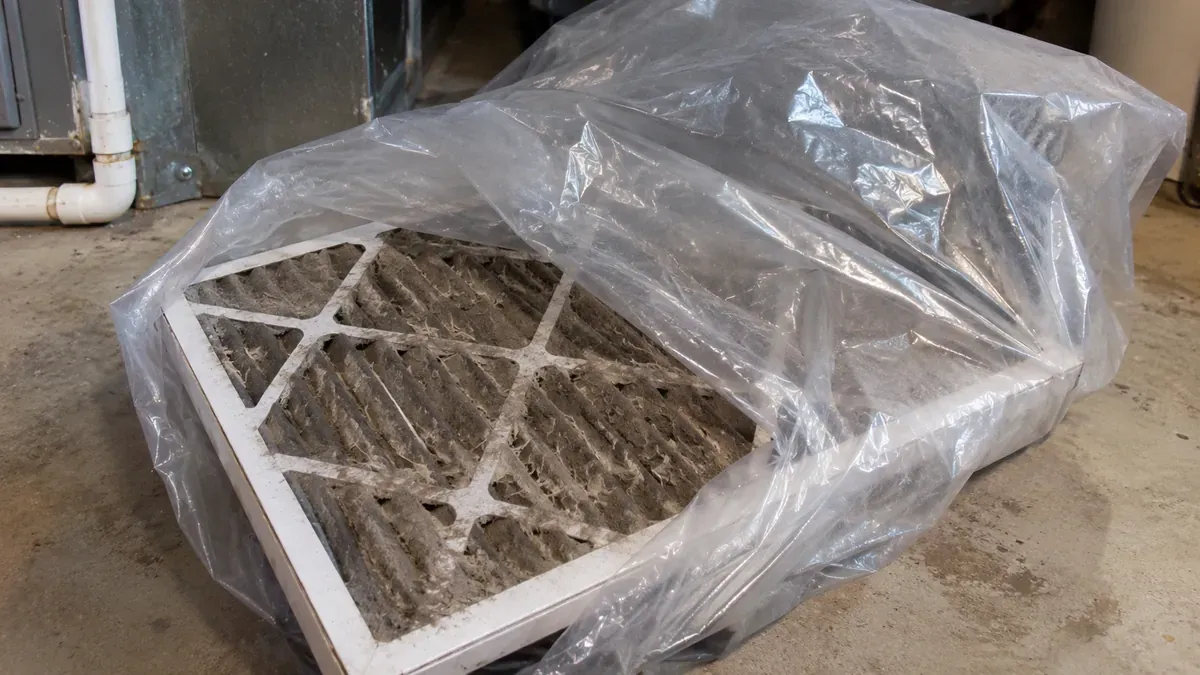
Most used air filters can’t be recycled. A filter is a mix of fiberglass or synthetic media, a wire support, a cardboard frame, and glue, and by the time you pull it out, it’s packed with dust, pet dander, and other debris. For a typical home, the right move is to seal the old filter in a bag and put it in your regular trash, not the recycling bin.
Swapping the filter is one of the simplest jobs a homeowner can do, but it’s easy to get wrong. If you’re not sure which filter your system takes or how often to change it, a technician can explain filter care and a suitable interval for your equipment during an AC maintenance visit. Here’s what to do with the old one.
Are Air Filters Recyclable?
Curbside recycling is built for clean, simple materials like paper, certain plastics, and metal cans. A used filter is the opposite. The cardboard frame is recyclable on its own, but it’s glued to the media and coated in whatever the filter caught, so the whole unit isn’t something a recycling facility wants. Tossing it in the bin anyway, sometimes called wish-cycling, can disrupt operations at the facility.
This applies to the filters most homes use, including fiberglass and pleated filters, whether they serve an AC, a furnace, or a heat pump. In San Antonio, the city’s recycling guidelines don’t list air filters among the items accepted in the blue cart, and the city’s advice for anything you’re unsure about is to put it in the brown trash cart. If you live outside city limits or use a private hauler, check what your hauler accepts.
Is It Legal to Throw Away an Air Filter?
In general, yes. Used filters from a home are treated as ordinary household trash, and bagging one is mostly about keeping dust from spilling when the bin is emptied. We’re not aware of any San Antonio rule that requires special handling for a typical residential filter, but local rules vary, so ask your city or hauler if you’re unsure.
A few situations are different. If a filter was used during mold cleanup, renovation dust, or work that may have disturbed lead paint or asbestos, ask your contractor or the city’s solid waste department how to handle it. Filters from commercial or industrial buildings can also fall under different rules.
How to Remove and Dispose of a Used Filter
- Turn the system off at the thermostat and have the replacement filter ready, so the system never runs without one.
- Note the filter size and the airflow arrow printed on the frame, then slide the old filter out gently. Don’t shake or bang it.
- Put it in a plastic bag right away. The wrap from the new filter works well. Tie or tape the bag shut.
- Install the new filter with the arrow pointing in the same direction as the old one.
- Put the sealed bag in your outdoor trash bin, not the recycling bin, and wash your hands. Wear a dust mask if the filter was especially dirty.
Don’t burn old filters. The synthetic fibers and adhesives can give off harmful fumes.
Can Any Part of a Filter Be Recycled?
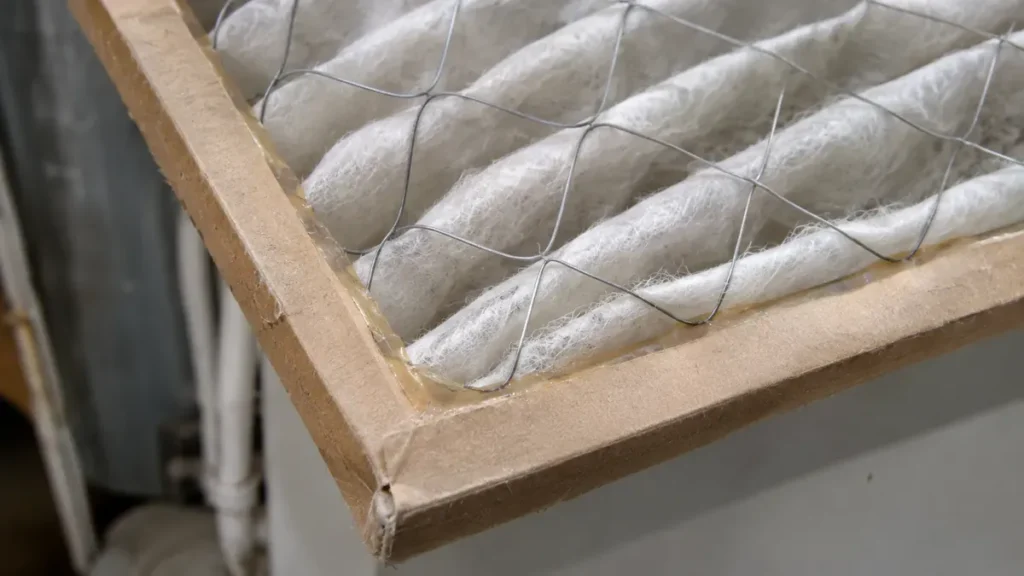
Some guides suggest cutting the frame apart so the cardboard and metal grid can be recycled, with the media going in the trash. It can be done, but the payoff for one filter is small, the wire edges are sharp, and the cardboard has been sitting in dust for weeks. Unless your recycler specifically says it accepts the parts, the simplest and safest route is to bag the whole filter and throw it out.
Only filters labeled washable are meant to be rinsed and reused. Rinsing a disposable fiberglass or pleated filter damages the media and releases trapped particles back into the air.
How to Cut Down on Filter Waste
- Match the filter to the system. Pleated filters usually last longer than basic fiberglass ones, which are typically replaced about monthly, while a pleated filter can often go up to about three months. Follow the schedule on the packaging or from your technician, though, because stretching a filter past its limit costs more than it saves.
- Ask before switching to a denser filter. Not every system can handle a high-efficiency filter, and restricted airflow can lead to problems like an iced-up AC.
- Use a washable filter only if your equipment allows it. They can last for years, but they’re often less efficient than disposable ones and need cleaning and full drying on schedule.
- Buy the right size. Unused filters don’t expire on the shelf, so a spare set is fine, but a wrong-size filter ends up wasted.
When to Call a Technician
A filter that gets dirty much faster than usual is worth mentioning. It can point to dusty or leaky ducts, pets, recent renovation, or an airflow problem, and a technician can check the system and tell you which. If dust is the issue, our air duct cleaning team can inspect the ducts and tell you whether cleaning would help. If the system is struggling to keep up and the filter isn’t the cause, our AC repair team can diagnose it.
Texas Air Repair is a local, family-owned HVAC contractor that has served San Antonio and the surrounding communities since 2010. Call 210-380-8000 or book service online, and we’ll help you sort out your filters and your system.
