
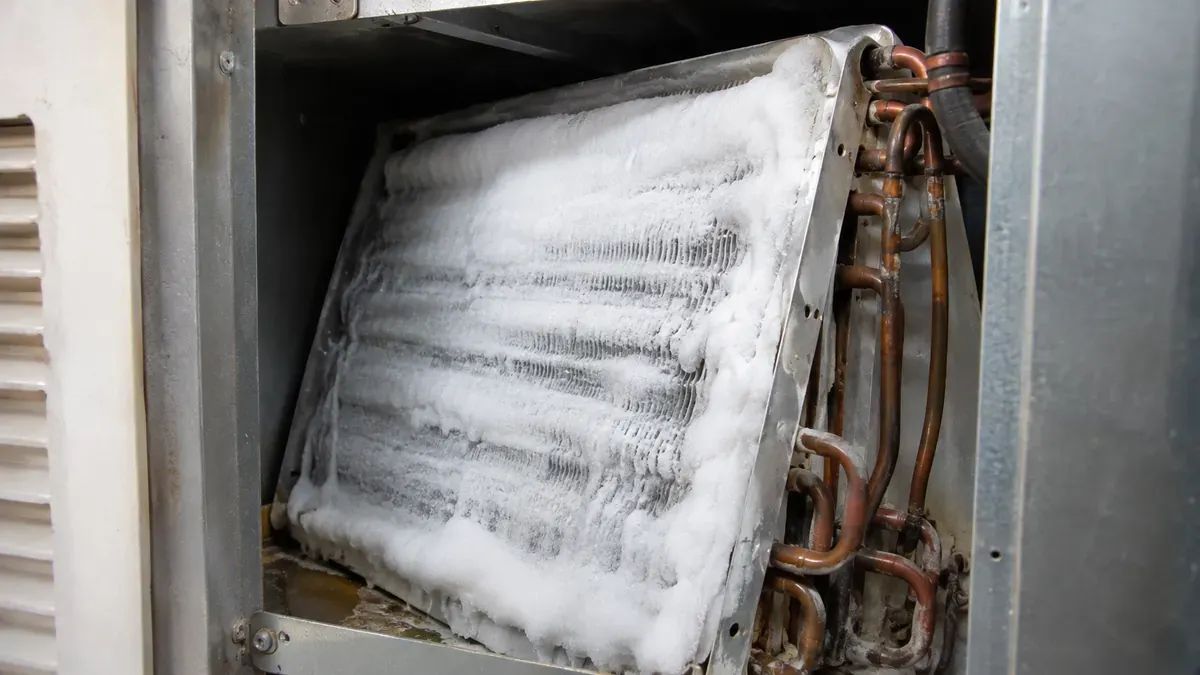
To defrost a frozen AC unit, switch the thermostat from Cool to Off, set the fan to On, and let the ice melt completely before you run the air conditioner again. Don’t chip at the ice or try to speed it up with heat. Thawing usually takes a few hours, and the ice is a symptom, so the next step is finding out why it formed.
If the ice comes back after you restart the system, you’ll want a technician to find the cause, and our AC repair team can do that. Keeping the system serviced is the best way to stop it from happening in the first place, which is what AC maintenance is for.
Signs Your AC Is Frozen
The part that freezes is the evaporator coil inside your indoor unit, so you often can’t see the ice without opening a panel. Other clues are easier to spot. Airflow from the vents gets weak, the air that does come out feels warm or only slightly cool, frost shows up on the copper refrigerant line, or water drips and pools around the indoor unit. If the house isn’t cooling and you don’t see any ice, our guide to AC not cooling helps narrow down other causes.
How to Defrost an AC Unit Step by Step
- Turn the thermostat from Cool to Off. Running the compressor with a frozen coil adds strain and keeps making more ice.
- Set the fan to On so the blower pushes room-temperature air across the coil. If your system or manual doesn’t allow it, leave the whole system off and let it thaw on its own.
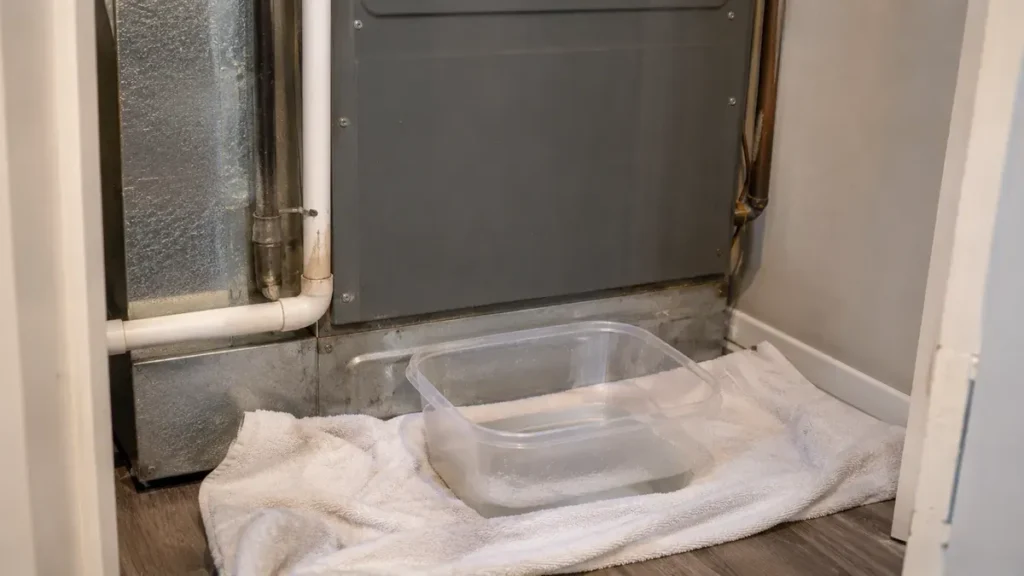
- Put towels or a shallow pan around the indoor unit. Meltwater can overflow the condensate drain pan, and a lot of ice makes a lot of water.
- Check the air filter and replace it if it’s dirty. Open any closed vents and return grilles while you’re at it.
- Wait until every bit of ice is gone. A light frost may clear in one to three hours, while heavy ice can take four to eight hours or longer.
- Restart the system only when the ice has melted, the area is dry, and air flows freely from the vents.
What Not to Do
Keep running the AC, and you’ll make the ice worse, because the frozen coil blocks airflow and the compressor works harder. Don’t scrape or chip the ice, which can damage the coil or crack a refrigerant line. Skip the hair dryer, space heater, and hot water too. Heating the coil quickly can crack or warp parts that were never meant to take that kind of shock, and a slow thaw works fine.
Why an Air Conditioner Freezes Up
An evaporator coil is supposed to run cold, but it needs a steady flow of warm indoor air across it to stay above freezing. When the coil drops below 32 degrees, the moisture that collects on it turns to ice, and the ice blocks more airflow, which makes the coil even colder. Two problems start most freeze-ups.
Restricted airflow
This is the most common cause. A clogged filter, closed or blocked vents, a dirty evaporator coil, or a weak blower motor all cut the air passing over the coil. Replacing the filter and opening the vents are quick checks, and you can do them yourself.
Low refrigerant
Air conditioners don’t use up refrigerant, so low levels almost always mean a leak. The pressure in the coil drops, the coil gets too cold, and it freezes. Topping off the refrigerant without fixing the leak is only a temporary patch, so the freezing returns. A technician needs to find the leak, repair it, and charge the system to the manufacturer’s specification.
How to Keep It From Freezing Again
Check your filter every month during the heaviest cooling season and replace it when it’s dirty. Keep supply vents and return grilles open and clear of furniture, rugs, and curtains. Make sure the thermostat is working normally, and the system isn’t being asked to run nonstop. Most importantly, schedule routine maintenance, where a technician cleans the coil, checks the drain, tests the blower, and looks at refrigerant levels before small problems turn into frozen ones.
When to Call a Technician
A one-time freeze from a dirty filter is easy to fix. Call for service if any of these apply:
- The coil freezes again after you’ve thawed it and restarted the system.
- The filter is clean, and the vents are open, but ice still forms.
- You suspect a refrigerant leak, such as ice on the line along with weak cooling.
- Water is leaking from the indoor unit, and you can’t find the source.
- The blower seems slow, noisy, or isn’t running at all.
Repeated freezing strains the compressor and can shorten the life of the system, so it isn’t worth waiting out. If the AC is down on a hot day, our emergency AC repair service is there when you can’t wait for a regular appointment.
What About Window Units?
A window air conditioner freezes for similar reasons, usually a dirty filter or blocked airflow. Turn it off, unplug it if the manual says to, and let it thaw completely before you use it again. Clean the filter while you wait, and don’t point a heater or hair dryer at it.
Texas Air Repair is a locally family-owned HVAC contractor that has served San Antonio and the surrounding communities since 2010. Call 210-380-8000 or book service online, and we’ll find out why your AC is freezing.
