
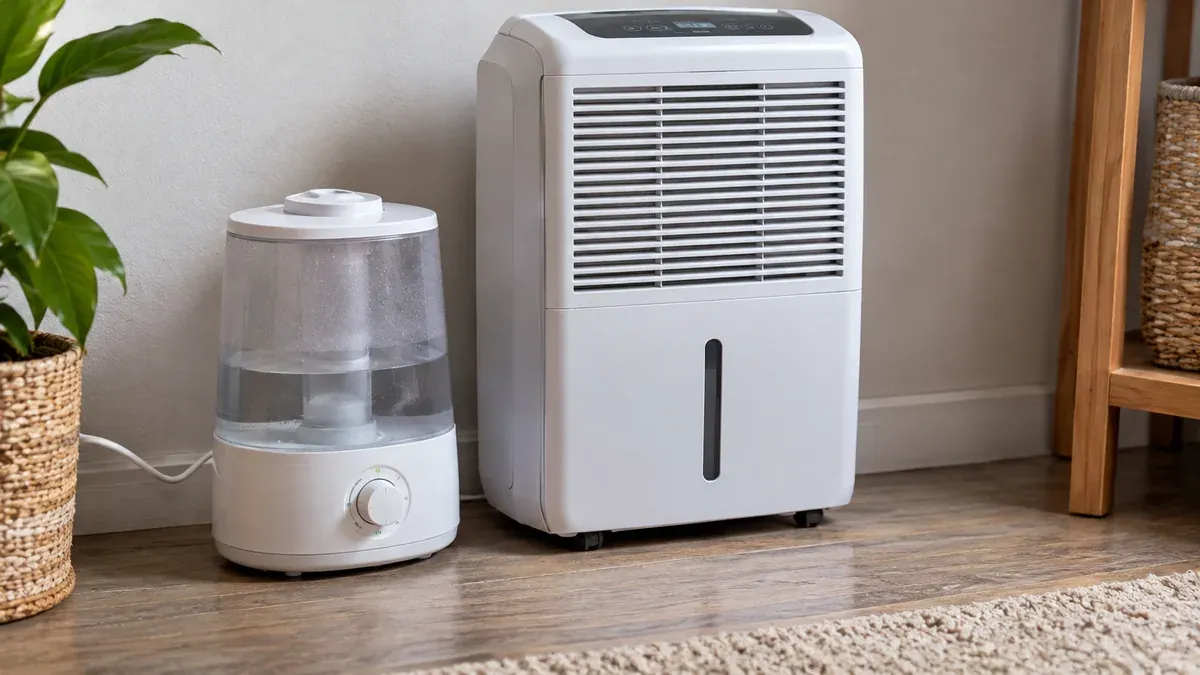
A humidifier adds moisture to dry air, and a dehumidifier removes moisture from damp air. Neither one is better across the board. The right choice depends on what’s happening in your home, and the way to find out is to measure the humidity. The EPA recommends keeping indoor relative humidity below 60 percent, ideally between 30 and 50 percent. If your home sits below that range, you need a humidifier. If it’s regularly above it, you need a dehumidifier.
Humidity also swings with the seasons here, and your air conditioner is already part of the picture, because it pulls moisture out of the air as it cools. If your home feels clammy even while the AC runs, our AC repair team can check whether the system is working the way it should, and regular AC maintenance includes checking the coil and drainage.
Humidifier vs. Dehumidifier at a Glance
| Humidifier | Dehumidifier | |
|---|---|---|
| What it does | Adds moisture to the air | Removes moisture from the air |
| Best for | Dry air, usually in winter | Damp air, usually in warm, humid months |
| Humidity level | Regularly below about 30 percent | Regularly above about 50 percent |
| Upkeep | Daily water changes and regular cleaning | Emptying the tank or running it to a drain |
Start by Measuring Your Humidity
A hygrometer is an inexpensive gauge that reads the relative humidity in a room, and most hardware stores carry one. Check it in the room where you notice the problem, at different times of day, and across seasons, since humidity changes with the weather and from room to room. Many humidifiers and dehumidifiers also have a built-in humidistat that holds whatever level you set, which makes it easier to stay in the 30 to 50 percent range.
Signs You Need a Humidifier
- Dry skin and eyes, or chapped lips
- A dry, irritated nose and throat, or a nagging cough
- Static shocks
- Wood floors, furniture, or instruments that are drying out, cracking, or warping
- Allergy or asthma symptoms that seem worse indoors
This usually shows up in winter, when the heater is running, and the outdoor air is cold and dry.
Signs You Need a Dehumidifier
- A musty smell in the house
- Visible mold or mildew, especially in bathrooms, closets, or corners
- Condensation on windows or walls
- Air that feels sticky or clammy
- Signs of dust mites, which thrive in damp conditions
Warm, humid months are the usual culprit, and San Antonio has plenty of them. If the musty smell comes mostly from your vents rather than a particular room, the source may be the HVAC system itself, and our guide to musty air duct odors explains what to check.
Your AC Already Dehumidifies
Air conditioners and heat pumps remove moisture as they cool. Warm air passes over the cold evaporator coil, moisture condenses on it, and the water drains away through the condensate line. A well-running modern system often handles humidity on its own, so you may not need a separate dehumidifier at all.
A supplemental dehumidifier can still help when the outdoor air is very humid or when an older system struggles to keep up. But if humidity stays high while the AC is running, don’t just buy a dehumidifier to cover for it. Have the system checked first, because the cause could be airflow, drainage, or the condition of the equipment.
Portable or Whole-House?
- Portable units treat a single room. They’re easy to set up, but they need regular refilling or emptying and ongoing cleaning. If you use a portable humidifier, our guide to preventing humidifier mold covers how to keep it clean.
- Whole-house humidifiers connect to your heating system and distribute moisture through the ductwork.
- Whole-house dehumidifiers are built into the HVAC system and treat the entire home.
Whole-house units generally need professional installation, and the right size depends on your home and your equipment. If you’re considering one, ask an HVAC professional whether it fits your system before you buy.
Humidifier or Dehumidifier for Allergies?
It depends on which side of the range your home falls on. Air that’s too dry can irritate your nose and throat, while air that’s too damp feeds mold and dust mites, and both can make allergy or asthma symptoms worse. Aim for the 30 to 50 percent range, keep your air filter changed, and talk to a doctor if symptoms continue.
Can You Use Both?
Yes. Many homes need a humidifier in the dry winter months and a dehumidifier when it’s humid. They just shouldn’t run in the same room at the same time, since they work against each other. Let the hygrometer tell you which one to run, and switch as the seasons change.
When to Call a Technician
- Humidity stays above 50 percent even while your AC runs
- The house feels clammy, or mold and condensation keep returning
- A musty smell comes from your vents
- Your AC runs constantly, but the home never feels comfortable
- You’re thinking about a whole-house humidifier or dehumidifier and want to know if it suits your system
Texas Air Repair is a local, family-owned HVAC contractor that has served San Antonio and the surrounding communities since 2010. Call 210-380-8000 or book service online, and we’ll find out why your home feels the way it does.
