
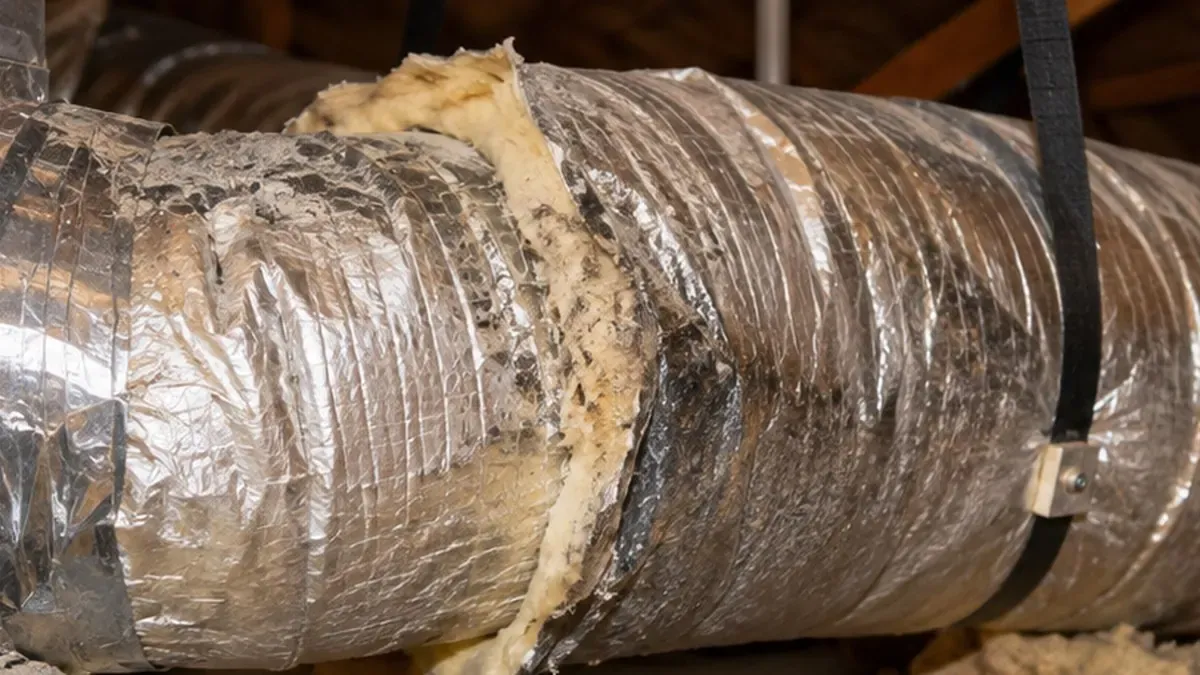
A musty smell from your vents usually comes from moisture, not from dust alone. The usual sources are mold or mildew on the indoor coil and drain pan, a dirty filter, or damp spots in the ducts themselves, and each one has a different fix. Start by changing the filter and checking for standing water. If the smell stays, something needs cleaning or repair, and spraying air freshener into the vents will only cover it up.
If the smell keeps coming back, our air duct cleaning team can inspect the system and find the source, and air duct repair takes care of leaking or damaged ducts.
Find Where the Smell Is Coming From
The clues tell you a lot about the cause:
- Strongest when the system starts, then fades. This usually points to buildup on the coil or in the drain pan rather than the ducts.
- Worse in humid weather or in one part of the house. Ducts in a hot attic can sweat when cold air runs through them, especially if they’re leaky or poorly insulated. Damp insulation or duct board can hold odor for a long time.
- A dusty, stale smell. Dust has built up on the filter, registers, or return grilles.
- A dusty burning smell the first time the heat comes on. That’s usually dust burning off, and our heater burning smell guide explains how to tell it from a real problem.
- A sharp, rotten smell. This can mean a dead animal in the ducts, the attic, or the unit itself.
Quick Fixes to Try First
- Replace the air filter, and keep a regular schedule after that.
- Look at the drain pan under the indoor unit for standing water. If the drain line is backed up, our guide on how to clear a clogged drain walks through it.
- Vacuum the supply registers and return grilles. Dust on a return grille is normal and easy to remove.
- Run the system’s fan for a while so the coil and ducts can dry out.
- Check your indoor humidity, and if you run a humidifier, follow our advice on keeping a humidifier clean, so it isn’t adding moisture.
Stay away from bleach, disinfectant sprays, and ozone generators. Bleach can corrode the coil, sprays can spread through the house with the air, and ozone is a lung irritant. None of them fixes the moisture that’s causing the smell.
When the Ducts Themselves Need Attention
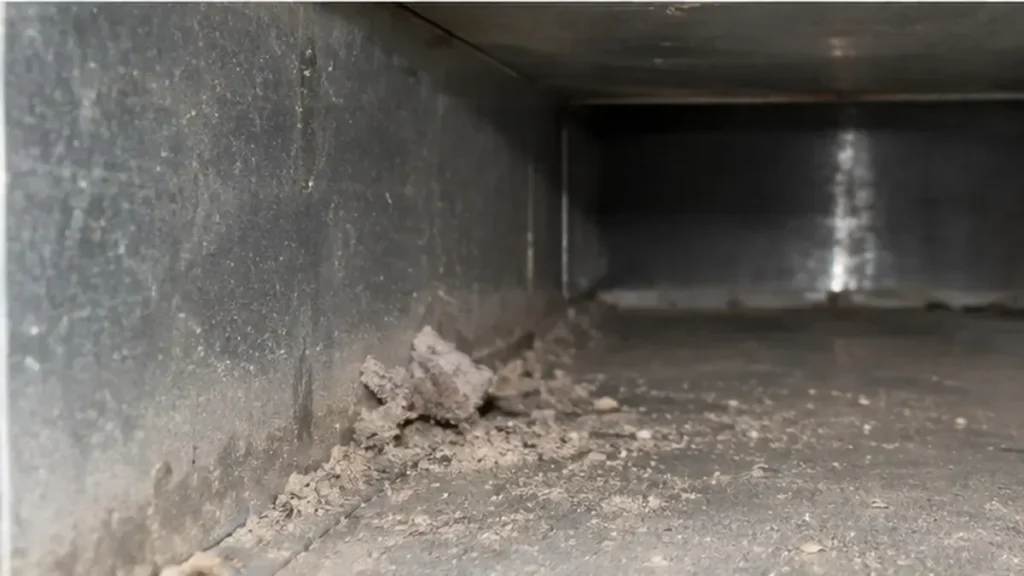
The EPA doesn’t recommend routine duct cleaning, and it says cleaning hasn’t been shown to prevent health problems. It does say cleaning can make sense in three situations: substantial visible mold inside the ducts, a rodent or insect infestation, or ducts clogged with heavy dust and debris. A musty odor is one of the signs that something may be wrong, so it’s worth finding out whether any of those apply.
Two points matter if you do go ahead. First, the moisture has to be fixed along with the cleaning, or the smell comes back. Second, wet or moldy fiberglass duct board and insulation should be replaced, not cleaned. A cleaning that skips the coil, drain pan, and blower can also miss the real source, so ask what the job covers before you agree to it.
If You Suspect a Dead Animal
A strong, rotten smell that gets worse over a few days can mean an animal has died in a duct, the attic or the unit. Don’t try to handle it yourself. Call pest or wildlife control to remove it, and have the ducts checked afterward, since cleanup or duct repair may be needed.
How to Keep Musty Odors From Coming Back
- Change the filter on schedule.
- Keep the drain pan and line clear.
- Seal and insulate ducts that run through the attic or other unconditioned spaces.
- Keep indoor humidity under control.
- Schedule regular maintenance so small buildup gets cleaned before you can smell it.
- When replacing an AC, make sure the new unit is sized correctly. An oversized unit cycles on and off and doesn’t remove moisture well.
When to Call a Technician
Call if the smell is still there after the filter and drain are checked, if you can see mold, if the odor is rotten or comes with a burning smell, or if you suspect leaking or damp ducts. A technician can find out whether the problem is the coil, the drain, the ducts or something else, so you only pay to fix the part that’s causing it.
Texas Air Repair is a locally family-owned HVAC contractor that has served San Antonio and the surrounding communities since 2010. Call 210-380-8000 or book service online, and we’ll track down where the smell is coming from.
