
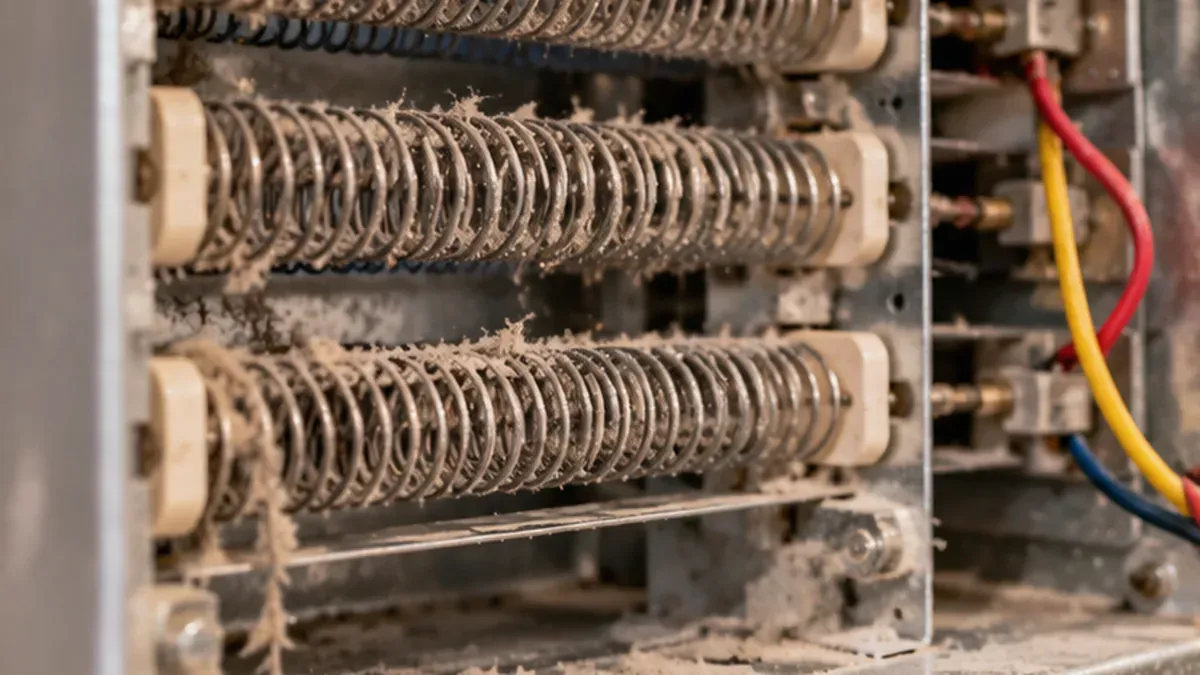
If your heater smells like it’s burning the first time you turn it on for the season, the most likely cause is dust. Months of it settle on the heating elements or burners while the system sits idle, and the first few warm cycles cook it off. That smell is normal, and it should fade on its own within the first hour or so of running.
Not every burning smell is that harmless, though. An odor that’s sharp, chemical, or smoky, or one that hangs around for days, usually points to a part that’s overheating, and a rotten-egg smell isn’t a burning smell at all. The rest of this article covers how to tell them apart and what to do about each one.
Why the First Cold Front Brings the Smell
In San Antonio, the heat might sit unused from March until the first real cold front in October or November. That’s a long stretch for dust to collect, and in many homes the equipment lives in the attic, where dust and insulation fibers find their way into the cabinet more easily than they would in a basement or closet.
What’s burning depends on your setup. A gas furnace has burners and a heat exchanger. Many Texas homes heat with electric heat strips inside the air handler instead, which are coils that glow hot like the elements in a toaster. Heat pumps often have those same strips as backup heat. All of them collect dust over the summer, and all of them give off that familiar dusty, slightly scorched smell when they warm up for the first time.
To help it clear faster, crack a window or two and let the system run through a few full cycles. Most homeowners notice it’s gone by the end of the first evening, and at most a faint trace may linger the next morning.
When the Smell Means Something Else
The type of smell, and how long it lasts, tells you a lot more than the fact that something smells off. Treat any of the odors below seriously, and if you’re unsure, it’s always reasonable to turn the system off and have it checked by a heating repair technician.
Hot Metal or Electrical Smell
A smell like hot metal, scorched wiring, or burnt gunpowder often means an electrical part is overheating. A blower motor that’s struggling, frequently because a clogged filter is making it work too hard, can give off this smell, and so can a loose wire connection or a failing control board. If you notice it, turn the heat off at the thermostat, check the filter, and leave the system off until it’s been looked at. Don’t keep testing it to see if the smell comes back.
Burning Plastic or Rubber
This one usually means something that doesn’t belong near the heat has found its way there. In attics, holiday decorations and storage boxes often end up pushed against the furnace or air handler over the summer. A plastic toy or wrapper can also drop into a floor vent and land on the duct near the heat source. Wiring insulation that’s melting gives off a similar smell, which is why it’s worth shutting the system off until you’ve found the source.
A Smell That Won’t Go Away
Dust burn-off fades quickly. If the dusty smell is still strong after a full day of normal use, or it comes back every time the heat kicks on, something more than seasonal dust is going on. Debris sitting directly on a heat strip, a dirty burner or an airflow problem that keeps the equipment running too hot can all keep the smell going long after the first cycle.
A Musty Smell When the Heat Comes On
Some heat pump owners notice a musty, dirty-sock smell when the system switches to heating. That odor usually comes from moisture and buildup on the indoor coil, where bacteria can grow after a long, humid cooling season. Warm air passing over the coil carries the smell into the house. It isn’t a fire risk, but it doesn’t go away on its own, and it’s worth having the coil inspected and cleaned.
If It Smells Like Rotten Eggs
Natural gas has no smell of its own, so utilities add a chemical that smells like rotten eggs or sulfur. If you notice that smell anywhere near a gas furnace, water heater, or stove, don’t try to find the source, and don’t switch lights or appliances on or off. Leave the house right away, leave the door open behind you, and once you’re outside, call 911 and CPS Energy’s emergency line at 210-353-HELP (4357), as CPS Energy advises.
It’s also worth knowing that carbon monoxide, the gas a malfunctioning furnace can produce, has no smell at all. If you heat with gas, working carbon monoxide detectors are the only reliable warning, and the start of heating season is a good time to test them and replace their batteries, along with the rest of our fall maintenance checklist.
What You Can Safely Check
A few checks are safe to handle yourself and can rule out the most common causes:
- Replace the air filter, especially if it hasn’t been changed since summer. A dirty filter is one of the easiest ways to make a blower motor overheat.
- Look around the furnace or air handler, including in the attic, for boxes, decorations, or anything else stored close to the equipment, and move them well away.
- Shine a flashlight into floor and wall vents to look for anything that may have fallen in.
- Test your smoke and carbon monoxide detectors.
Anything inside the furnace or air handler cabinet, including the burners, heat strips, and wiring, should be left to a technician.
Getting It Checked
Texas Air Repair is a family-owned San Antonio company that has been working on local heating and cooling systems since 2010, and our technicians service gas furnaces, electric heat, and heat pumps. When you call about a burning smell, tell us what it smells like and when it started, since that helps us narrow down the cause before we arrive. We’ll explain what we find and quote the repair before any work begins.
If the smell is electrical or smoky and you’ve already shut the system off, call us at 210-380-8000, or you can request service online for anything less urgent. And if you’re thinking about replacing an older system that’s been giving you trouble, we also offer free estimates on heating installation.