
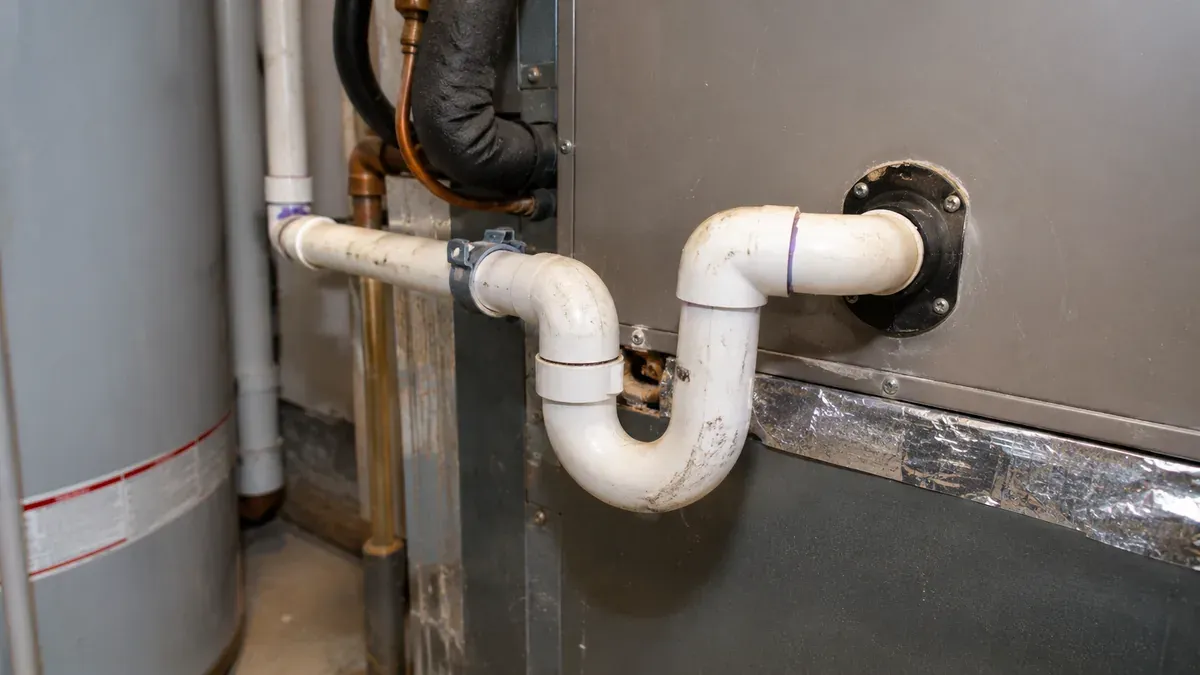
An air conditioner that sounds like running water is usually doing one of two things: draining condensation the way it’s supposed to, or dealing with water or refrigerant that has backed up somewhere it shouldn’t be. A brief trickle from the indoor unit on a humid day is normal. A steady rush, gurgling or bubbling is worth checking, because a clogged drain can overflow and a refrigerant leak only gets worse with time.
If the sound keeps up, our AC repair team can find the source before it becomes water damage. Regular AC maintenance also keeps the drain line clear, which is behind many of these noises.
Why an AC Makes Water Sounds at All
Cooling your home also pulls moisture out of the air. That moisture collects on the indoor evaporator coil, drips into a pan underneath, and flows out of the house through a drain line. On humid days there’s a lot of it, so some water noise is part of how the system works. The question is whether what you’re hearing matches that normal trickle or something louder and more constant.
A Short Trickle Can Be Normal
Occasional dripping or a soft trickle while the AC runs, especially on a muggy afternoon, usually means condensate is draining properly. It’s normal when the sound is brief, the house is cooling as it should, and you don’t see water around the indoor unit. Running water that lasts, or that comes with any of the problems below, is not.
A Clogged or Slow Drain Line
Algae and debris slowly build up inside the drain line. When it slows or blocks, water backs up in the pan and can splash, gurgle, or trickle at the unit. Other signs of a clog include:
- A musty smell from the indoor unit or vents
- Standing water near the indoor unit, or on the floor or ceiling nearby
- The AC shutting off on its own
That last one is the float switch doing its job. When the pan fills, the switch shuts the system down so the water doesn’t overflow. If your AC stops cooling and you can hear water, check the pan before assuming something more serious is wrong. Our guide to AC not cooling covers other reasons a system quits.
A Frozen Coil That’s Thawing
When the evaporator coil freezes, the ice eventually melts, and the meltwater can sound like a steady flow before it overflows the pan. A dirty filter, low refrigerant, a dirty coil or a weak blower can all cause the freeze. Look for frost on the indoor coil or on the copper refrigerant line. If you see ice, set the thermostat to Off and the fan to On so it can melt completely before the AC runs again, and plan on having the cause found if it freezes a second time.
Gurgling, Bubbling or Hissing: A Refrigerant Problem
Refrigerant moves through sealed copper lines. When the system is charged correctly, the liquid line stays full and quiet, so gurgling or bubbling points to a problem such as a leak, low charge or trapped air. Hissing can mean refrigerant is escaping through a small opening, and it can also come from a leaking internal valve or a failing compressor.
Other signs of a refrigerant leak are ice on the coil or lines, warm air from the vents, and weak cooling. An air conditioner doesn’t use up refrigerant, so a low charge almost always means a leak. Topping it off without repairing the leak is only a temporary patch, and refrigerant should only be handled by a certified technician.
Heat Pumps in Winter
If your system is a heat pump, a whooshing sound from the outdoor unit in cold weather is often the defrost cycle. The system briefly reverses to melt frost off the outdoor coil, and you may see steam rising from the unit. A cycle usually lasts 5 to 15 minutes and is normal. Call if defrost cycles are frequent, especially on mild or dry days, or if one runs well past 15 minutes and keeps recurring.
What You Can Safely Check
- Look at the indoor unit for standing water or a full drain pan.
- Check the air filter and replace it if it’s dirty.
- Look for ice on the coil or the refrigerant line.
- Notice whether the AC is shutting off by itself.
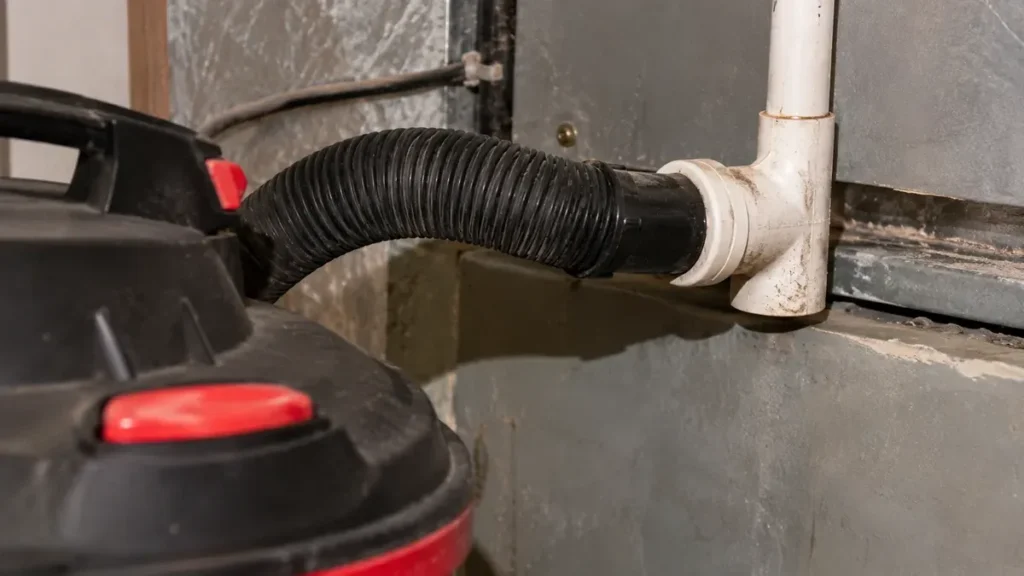
If the drain looks clogged, turn the system off first. Then use a wet/dry vacuum at the outdoor end of the drain line to pull out the blockage, and pour a cup of distilled vinegar into the access point near the indoor unit to break up buildup. A deeper clog is a job for a technician, who can clear it without damaging the pipe.
When to Call a Technician
Call for service if any of these apply:
- You hear gurgling, bubbling or hissing.
- There’s ice on the coil or refrigerant line.
- The drain keeps clogging or the AC keeps shutting off from a full pan.
- Clearing the drain and changing the filter doesn’t stop the noise.
- Water is pooling around the unit or showing up on a ceiling.
Water from a clogged drain can damage drywall, flooring and insulation quickly, so it’s not worth waiting out. If water is already spreading or the system is shut down on a hot day, our emergency AC repair service is available.
Texas Air Repair is a locally family-owned HVAC contractor that has served San Antonio and the surrounding communities since 2010. Call 210-380-8000 or book service online and we’ll find out where the water sound is coming from.
