
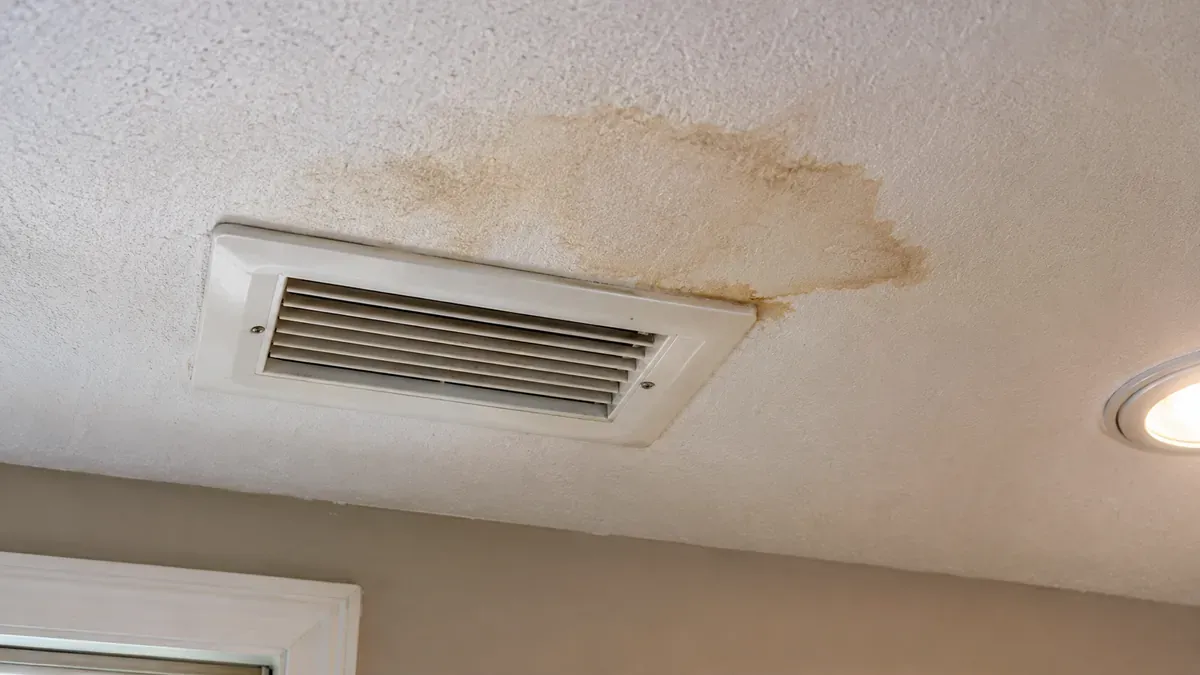
An AC leaking water almost always has a drainage problem, not a plumbing one. Your air conditioner pulls a surprising amount of moisture out of the air as it cools, and that water is supposed to collect in a pan under the indoor coil and run out through a drain line. When it ends up somewhere else, something along that path has backed up, cracked, or come loose.
The quickest way to narrow it down is to look at where the water is showing up. A stain on the ceiling, a drip from a pipe outside, a puddle by the indoor unit, and water around the outdoor unit each point to different causes, and some of them aren’t problems at all. If water is reaching electrical parts or coming through a ceiling, shut the AC down at the thermostat before anything else and call for AC repair services.
A Water Stain or Drip From the Ceiling
Across San Antonio, plenty of air handlers are installed in attics, so a leak often shows up as a brown stain on the ceiling below it or a drip from a light fixture or vent. That usually means water has overflowed the pans under the unit. The most common reason is a clogged drain line that sent water backing up until it had nowhere else to go.
It can also mean the pan itself has failed. Older metal pans rust through over the years, and plastic ones can crack, so water leaks out even when the drain is clear. If the stain is growing, keep the AC off until the pan and drain have been checked, since water sitting on drywall can lead to sagging and mold. Clearing the drain and inspecting the pan are part of routine AC maintenance, which is the easiest way to keep this from happening.
Water Dripping From a Pipe Outside
Look for a small PVC pipe ending over a window, under an eave, or near a soffit. On many attic installations, that’s the secondary drain, and it’s there on purpose. It carries water from the backup pan under the unit, and it’s placed where you’ll notice it. If that pipe is dripping, the main drain line is likely blocked, and the backup pan is catching the overflow.
A dripping secondary drain is a warning, not the problem itself. Don’t cap it or ignore it. Get the main line cleared before the backup pan fills or the system shuts itself off.
A Puddle Around the Indoor Unit
With an air handler in a closet or garage, water usually collects on the floor around it. Besides a clog, check for these:
- A condensate pump that stopped working. Some systems can’t drain by gravity, so a small pump pushes the water out. If it loses power or fails, its tank overflows.
- A drain connection that came apart. Fittings can slip loose, especially after recent work on the system.
- Ice on the indoor coil that’s melting. A dirty filter or low refrigerant can make the coil freeze. When the system cycles off, the ice melts faster than the pan can drain it. Replace the filter if it’s dirty, and if you see ice again, let it thaw with the cooling off before calling.
In late fall and winter, keep in mind that a high-efficiency gas furnace makes water of its own while it heats. If the puddle showed up after the heat started running, it may be coming from the furnace’s drain rather than the AC.
Water Dripping From the Vents
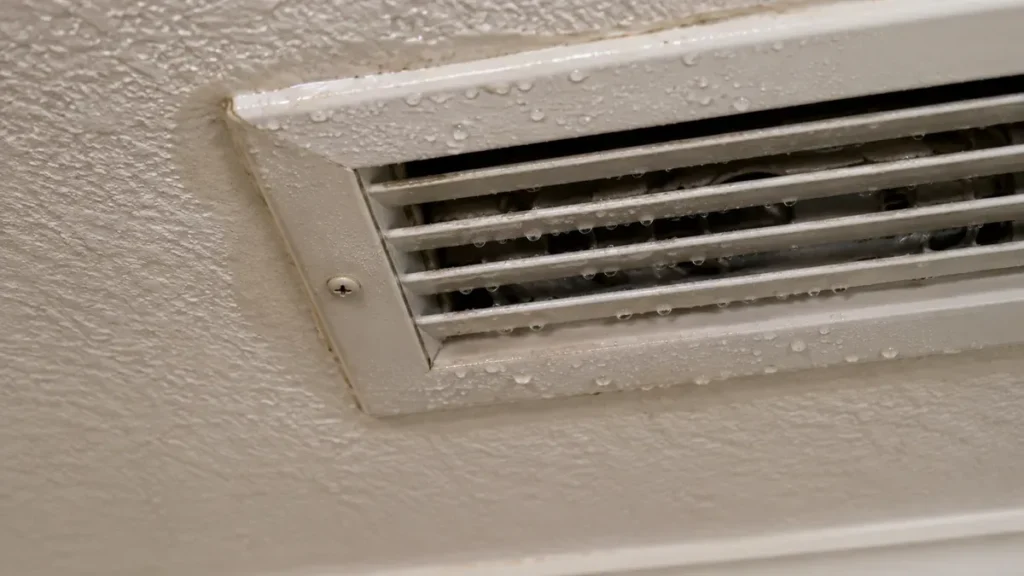
Water dripping from a supply vent usually isn’t a drain problem at all. It’s condensation forming on the vent or the duct behind it, where cold air from the system meets warm, humid air. Ducts that run through a hot, humid attic with missing or damaged insulation are prone to it, and so are vent boots that aren’t sealed tightly to the ceiling. Sealing and re-insulating the affected duct sections solves it.
Water Around the Outdoor Unit
A little water near the outdoor unit is usually normal. In summer, the copper line running into the house sweats, and in winter, a heat pump melts frost off its coil during each defrost cycle. Both can leave the ground damp. If the main drain line ends near the outdoor unit, it should also drip steadily while the AC runs, which is a good sign the drain is working.
What You Can Do Right Now
Switch the thermostat off, catch or mop up the water, and move anything that could be damaged. Then check the filter, look at the condensate pump if you have one to make sure it’s plugged in, and follow the drain line to its outside end to see whether it’s flowing. If the line is blocked, the outlet can often be cleared with a wet/dry vacuum.
Leave the rest to a technician if water keeps coming back, the pan is cracked or rusted, there’s ice on the coil a second time, or water has reached the ceiling.
Getting the Leak Fixed
Since 2010, Texas Air Repair has handled AC leaks all over San Antonio. On a leak call, our technician traces the water back to where it starts, whether that’s the drain, the pan, the pump, a frozen coil, or the ductwork, then shows you the cause and gives you a price before any repair.
