
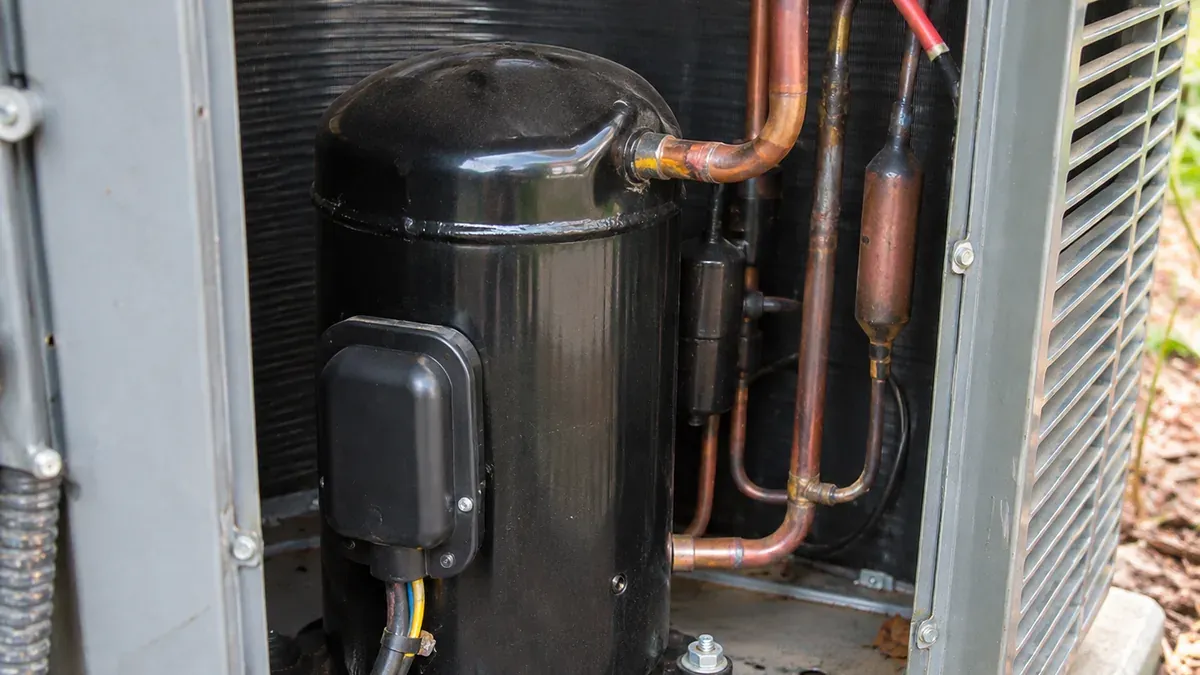
The main signs of a bad AC compressor are warm air from the vents while the system runs, grinding or clanking from the outdoor unit, shaking or struggling when the AC starts, a breaker that keeps tripping, and an outdoor fan that runs while the compressor stays silent. The catch is that cheaper parts, like a capacitor or contactor, can cause nearly the same symptoms. Only a technician testing the electrical readings can say for sure which one it is.
If your AC is showing any of these signs, our AC repair technicians can test the parts that feed the compressor before anyone recommends replacing it. If it’s an emergency, you can get emergency air conditioner repair when you can’t wait.
What the Compressor Does
The compressor sits in your outdoor unit and circulates refrigerant between the indoor and outdoor coils. It compresses the refrigerant gas, which raises its temperature and pressure so it can release heat at the outdoor coil. Without it, the refrigerant can’t move, and the AC can’t cool. Compressors are built to last the life of the system, but they can fail early from overheating, contamination, or a lack of lubrication.
Signs of a Bad AC Compressor
- Warm air from the vents. If the compressor isn’t pressurizing refrigerant, there’s no cooling, so the air stays warm even though the fan runs. Our guide to why AC air stays warm walks through the rest.
- Grinding, clanking, or rattling from the outdoor unit. These sounds can mean internal damage, such as worn bearings or a failing motor. Turn the system off rather than letting it keep running.
- Shaking or struggling at startup. A compressor that shudders or has trouble starting is working too hard to engage, which can point to wear.
- A breaker that keeps tripping. A compressor drawing too much current can overheat and trip the breaker. We explain why an AC trips breakers in a separate guide.
- The outdoor fan runs, but the compressor is silent. The system is moving air without a cooling cycle behind it.
Is It the Compressor or Something Cheaper?
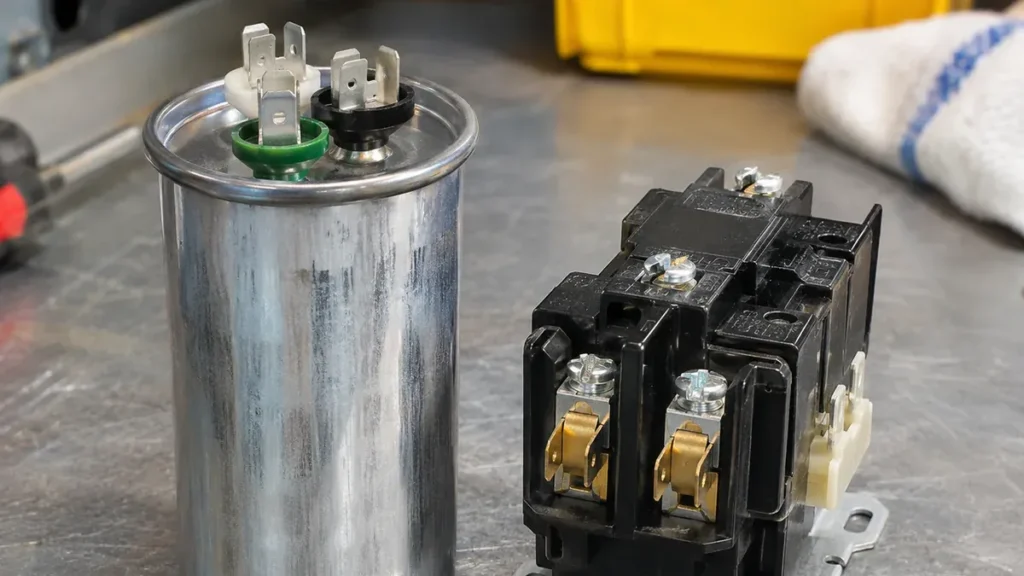
The compressor is one of the costliest parts of an AC to deal with, so it’s worth ruling out the parts that cause the same symptoms.
- Capacitor. This gives the compressor motor its starting jolt. A failing one often causes clicking or humming followed by a failed start, and it can leave the fan running while the compressor does nothing. It’s a relatively simple part to test and replace.
- Contactor. This switch sends power to the compressor. Wear or damage can cut that power, and a compressor without power looks a lot like a dead one.
- Thermostat or power supply. A thermostat that isn’t sending the start signal, a tripped breaker, or an outdoor disconnect that’s switched off can all keep the compressor from running.
- Low refrigerant. This almost always means a leak, and the compressor may shut itself down to protect itself.
- Overheating protection. On a very hot day, the compressor’s built-in overload protection can shut it off temporarily. Repeated shutoffs point to an underlying problem.
A technician can test the capacitor, contactor, and wiring and measure the current the compressor draws at startup. That’s how they separate a failing compressor from a cheaper fix.
What You Can Safely Check
- Make sure the thermostat is set to Cool, set below the room temperature, and has fresh batteries if it uses them.
- Reset the AC breaker once. If it trips again, stop and call for service.
- Confirm the disconnect switch near the outdoor unit is on.
- Clear leaves, dirt, and overgrowth from around the outdoor unit.
- If the unit shut off on a very hot day, wait about 30 minutes before restarting it.
Leave anything inside the unit to a technician. Capacitors can hold a dangerous charge even when the power is off, and handling refrigerant requires EPA certification.
What Causes a Compressor to Fail
- Overheating. A dirty outdoor coil, a slowing fan motor, or blocked airflow keeps the unit from shedding heat.
- Low refrigerant. A leak makes the compressor work harder and raises the risk of overheating.
- Electrical stress. A weak capacitor or repeated hard starts that go unrepaired wear the compressor over time.
- Age and wear. Even a well-kept compressor eventually wears out.
Most of these can be caught early. A seasonal AC maintenance visit includes checking the controls, coil condition, and electrical connections before they turn into a compressor failure.
Repair or Replace?
If a technician confirms the compressor is the problem, the decision comes down to age, warranty, and the condition of the rest of the system.
- Age. If the system is about 10 to 15 years old, replacing the whole unit is often the better investment, since a new system is more efficient and comes with a full warranty.
- Warranty. If the compressor is still under the manufacturer’s warranty, the part may be covered, which can leave you paying mostly for labor. Check your paperwork before you decide.
- Overall condition. If other components are wearing out or you’ve had repeated costly repairs, a new compressor may only buy time.
Ask for a quote before work begins so you can compare the repair against a replacement. If you’re leaning toward a new system, our page on replacing your air conditioner explains what’s involved.
Don’t Wait for a Total Breakdown
A struggling compressor rarely gets better on its own. Waiting until it fails completely can leave you without cooling on a hot day, and running it with a serious problem can cause more damage. If you notice any of the signs above, schedule a diagnosis while you still have a choice.
Texas Air Repair is a local, family-owned HVAC contractor that has served San Antonio and the surrounding communities since 2010. Call 210-380-8000 or book service online, and we’ll find out whether it’s the compressor or something simpler.
