
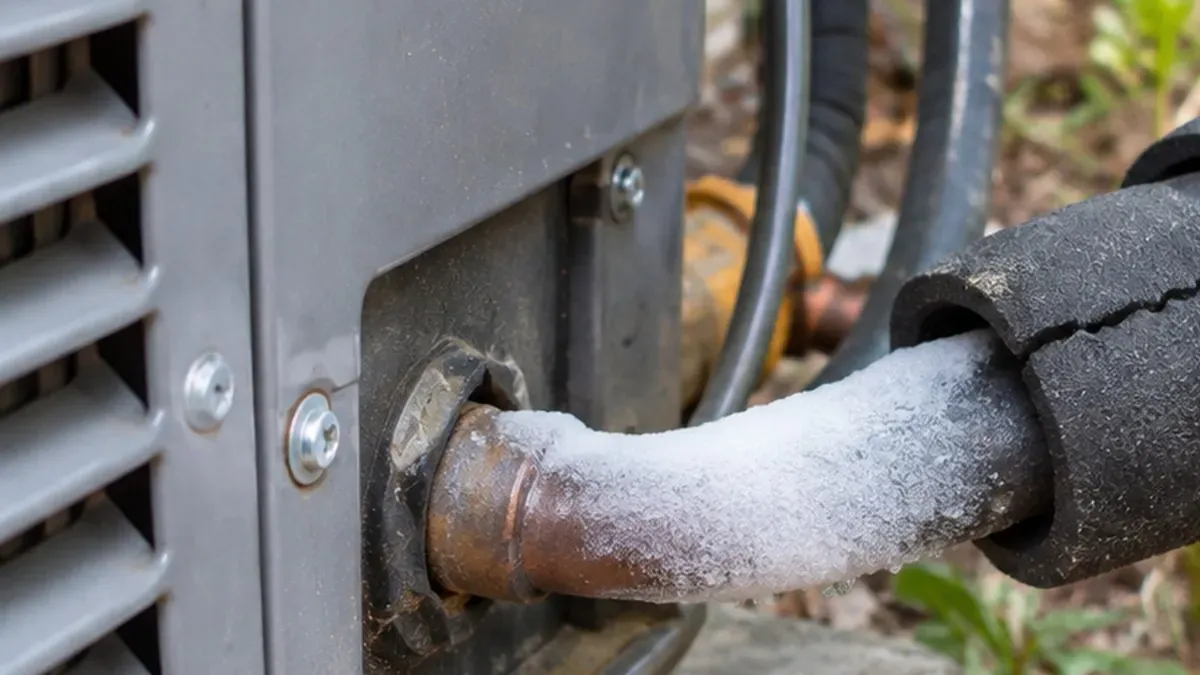
An air conditioner freezing up almost always comes down to one of two things: not enough warm air moving across the indoor coil, or not enough refrigerant in the system. Either one lets the coil get colder than it’s designed to, and once it drops below freezing, the moisture it normally pulls from the air turns to ice instead of dripping into the drain pan.
The ice itself is a symptom, so thawing it out only buys time. The rest of this article explains how to thaw the system without causing new problems, how to find what’s behind it, and when the cause needs a technician to repair the system.
Where You’ll See the Ice
Most homeowners first spot frost on the larger copper line running into the outdoor unit, the one wrapped in foam insulation. That line connects to the indoor coil, so frost there usually means the coil inside is frozen too. Other clues include weak airflow from the vents, air that isn’t as cool as it should be, or water around the indoor unit once the ice starts to melt.
One exception is worth knowing this time of year. On a heat pump, frost on the outdoor unit while it’s heating on a cold morning is usually normal, and the system clears it on its own through a regular defrost cycle. This article is about ice that forms while the system is cooling.
How to Thaw a Frozen AC Safely
Turn cooling off at the thermostat, but switch the fan setting to On. Running the blower without the compressor pushes room-temperature air across the coil and melts the ice much faster than leaving everything off. Depending on how thick the ice is, it can take a few hours, and a heavily iced coil may need longer.
While it thaws, keep an eye on the area around the indoor unit. All that ice turns into water at once, and it can overflow the drain pan, especially if the drain is partly blocked. If you see water collecting, our guide on water leaking from an AC explains where it’s likely coming from.
Don’t chip at the ice or use a hair dryer or heat gun on the coil. The fins and tubing are thin and easy to puncture, and a damaged coil turns a simple fix into a costly one. Wait until the lines and coil are completely clear before turning cooling back on.
Airflow Problems
Restricted airflow causes more frozen coils than anything else, and it’s also the one you’re most likely to be able to fix yourself.
The Filter
A clogged filter is the usual suspect, but a brand-new filter can cause trouble too. High-efficiency pleated filters catch more dust, and they also restrict more air. Some older systems and smaller duct setups weren’t designed for that much resistance. If the freezing started after you switched to a thicker or higher-rated filter, try a standard one and see whether the problem goes away.
Closed or Blocked Vents
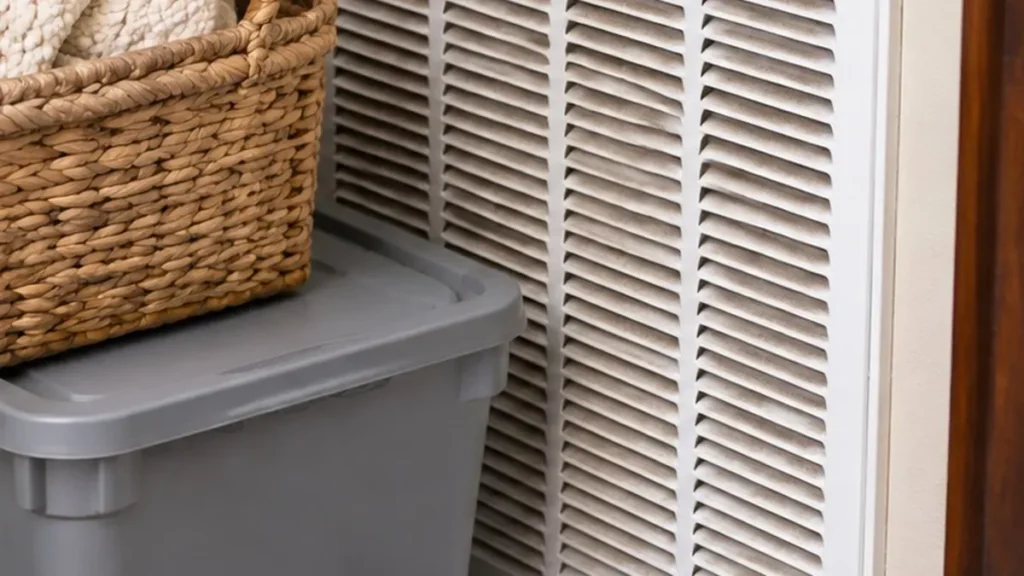
Closing vents in unused rooms seems like a way to save energy, but it reduces the total air moving through the system. Close enough of them and the coil can freeze. The same goes for return grilles covered by furniture or rugs. Open every supply vent and clear the returns before you restart the system.
A Dirty Coil or Failing Blower
Dust that gets past the filter builds up on the indoor coil over time and acts like a second, hidden filter. A blower motor that’s losing speed, or a weak capacitor on that motor, cuts airflow in a way that’s hard to notice from inside the house. Both need a technician to diagnose, and the coil gets inspected on a seasonal tune-up.
Low Refrigerant
When refrigerant runs low, the pressure in the indoor coil drops, and so does its temperature, often well below freezing. Since refrigerant isn’t used up during normal operation, low levels point to a leak. A system that refreezes even with a clean filter and open vents, or one that’s been losing cooling gradually over weeks, is a strong candidate. Locating and sealing the leak takes a certified technician, and a recharge on its own just postpones the next freeze.
Running the AC When It’s Cool Outside
In San Antonio, it’s not unusual to run the AC on a mild fall day and leave it on into a cool night. Most central air conditioners aren’t designed to cool when outdoor temperatures drop into the low 60s or below. On those nights, pressures in the system fall, and the indoor coil can get cold enough to ice over, even when everything else is working.
If the freezing only happens overnight during cooler weather, try opening windows or switching the thermostat off on those nights instead. If it happens on hot days as well, the cause is something else.
When to Call for Service
After a full thaw, with a fresh filter in place and every vent open, run it again and check the copper line after an hour or so. If frost comes back, the problem is inside the equipment, whether that’s the refrigerant charge, the blower, or the coil, and running it frozen can damage the compressor.
Texas Air Repair has been diagnosing frozen systems for San Antonio homeowners since 2010, with EPA 608 certified technicians handling refrigerant leak repair. On a visit, we pin down what’s causing the ice, walk you through it, and quote the repair up front. Call 210-380-8000, or set up a visit online.
