
AC short cycling is when your air conditioner turns on, runs for only a few minutes, shuts off before the house is comfortable, and then starts again soon after. The cause usually falls into one of four groups: the thermostat is getting the wrong reading, the system is shutting itself off to protect itself, an electrical part is failing, or the system is simply too big for the house.
It’s worth tracking down, because every start puts extra wear on the compressor and the house never gets a proper chance to dry out. Some causes are easy to fix yourself, and others call for a technician to repair your AC. Here’s how to tell which is which.
Is It Really Short Cycling?
How long an AC runs varies a lot with the weather, the house, and the equipment. On a mild day, a properly sized system may run shorter cycles than it does in August, and that’s normal. What makes a cycle “short” is that it ends before the job is done. The thermostat is still above its setting, or the house feels sticky, and the system shuts off anyway, then starts again a few minutes later.
To get a clearer picture, watch the system for an hour on a warm afternoon. Note when it starts, when it stops, and what the thermostat reads each time. A pattern of very short runs with the room still warm is the thing to look for.
Thermostat Causes
Since the thermostat decides when the system starts and stops, it’s the first place to look.
Where It’s Mounted
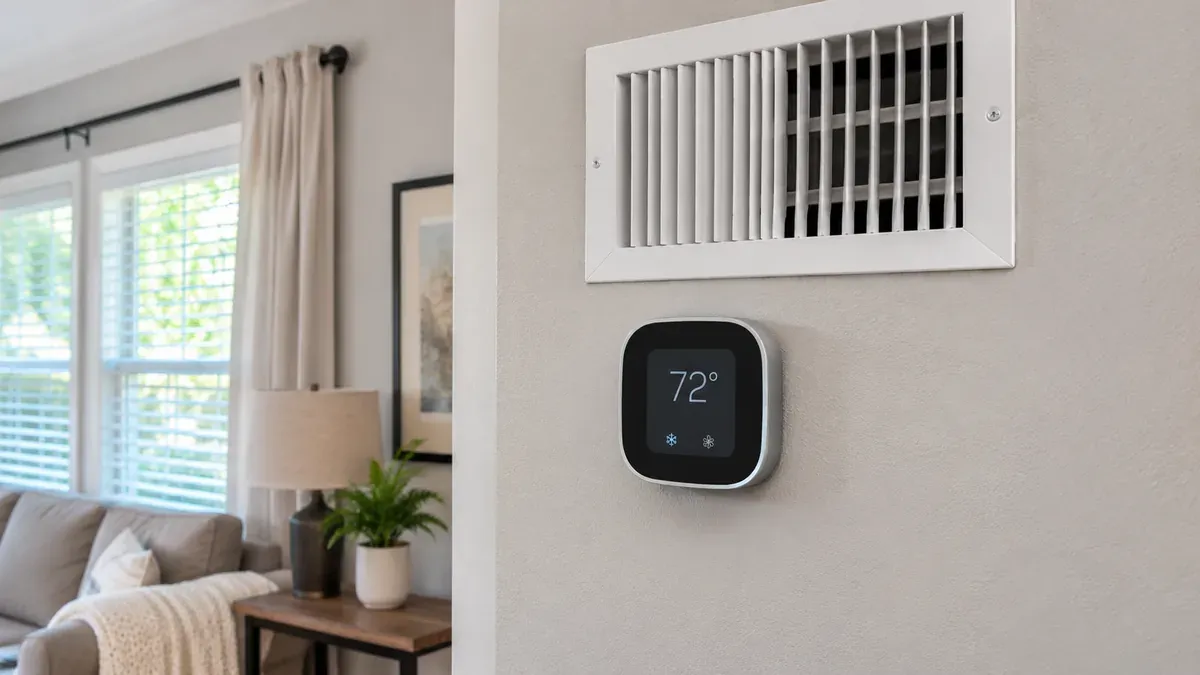
A thermostat that sits near a supply vent, in afternoon sun, or close to the kitchen reads the temperature of that spot, not the house. Cold air blowing on it can satisfy it within minutes, and the system shuts off while the rest of the house is still warm. If yours is in one of those spots, moving it or redirecting the nearby vent can solve the problem.
Settings and Batteries
Weak batteries and loose wiring can cause the thermostat to drop its signal partway through a cycle. Many digital thermostats also have a setting, often called cycle rate or temperature differential, that controls how far the temperature can drift before the system turns back on. If it’s set too tight, the system starts and stops more often than it needs to. The thermostat’s installer menu or manual will show you where to find it.
The System Is Shutting Itself Off
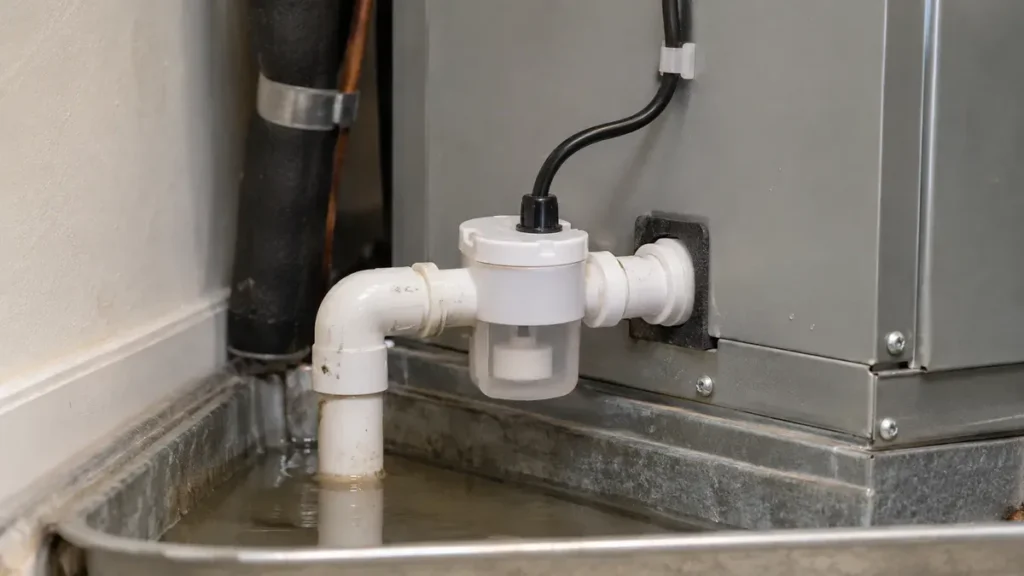
Air conditioners have safety switches that stop the system when something is wrong. When the underlying problem continues, the system restarts, hits the limit again, and shuts off, which looks like short cycling.
A clogged condensate drain is a common example. On systems with a float switch, rising water in the pan cuts power to the AC, and as the water slowly drains, the system comes back on for a while before shutting off again. If water is sitting under the indoor unit, our article on the signs of a clogged drain walks through what to check.
Pressure switches work the same way. Low refrigerant from a leak can trip a low-pressure switch, while a dirty outdoor coil or failing condenser fan can trip a high-pressure or temperature limit on a hot afternoon. A dirty filter or a frozen indoor coil can do the same thing by starving the system of airflow.
Electrical Problems
A weak capacitor, a worn contactor, or a loose connection can interrupt power to the compressor or fan mid-cycle. These parts wear out faster under heavy summer use, and their symptoms can come and go, which makes them easy to miss and is one reason electrical connections get looked at during a regular tune-up. If you hear clicking from the outdoor unit when the system stops, or the fan keeps running after the compressor shuts off, an electrical part is a likely suspect. These are high-voltage components, so testing them is a job for a technician.
An Oversized System
When an air conditioner is too large for the house, it cools the air so quickly that the thermostat is satisfied in a few minutes. That sounds efficient, but it isn’t. An AC removes humidity during the later part of each cycle, after the coil has been cold long enough for moisture to condense and drain away. Cut the cycle short, and the house ends up cool but damp, which in a humid place like San Antonio can feel clammy even at a low setting.
Oversizing usually goes back to how the system was chosen. Picking equipment by square footage or by matching the old unit’s size, rather than with a proper load calculation, is a frequent culprit. If your system has short-cycled since the day it was installed, and none of the other causes check out, size is worth asking about. Adjusting thermostat settings can help, but the real fix usually comes when the system is replaced with one sized for the house.
What to Check First
Start with what’s easy. Swap out a dirty filter, clear any furniture away from the return grilles, make sure the outdoor unit isn’t crowded by plants, and check the thermostat’s batteries and location. Also look for standing water beneath the indoor unit and frost on the copper lines.
If the short cycling continues, it’s time for a professional look. Routine maintenance on the coil, drain, and electrical parts also catches many of these problems before they start.
Getting It Diagnosed
Since 2010, Texas Air Repair has helped San Antonio homeowners get their cooling systems running the way they should. Our technicians check the controls, airflow, refrigerant, and electrical parts to find what’s cutting the cycle short, and we explain the cause and give you a price before any work starts. If your system turns out to be oversized, we’ll talk through your options honestly, including whether a repair still makes sense.
Call 210-380-8000, or request service online.
