
When a heat pump is not switching to heat, the cause is usually either the thermostat never asking for heat the right way or the part that flips the system from cooling to heating not responding. The first is often something you can fix in a few minutes. The second, a reversing valve or its controls, calls for heating repair.
This problem tends to show up in the fall. In San Antonio, a heat pump may spend six or seven months running only in cooling mode, so the first chilly week of the season is the first real test of whether it can change over. Below is how to narrow down which side of the problem you’re dealing with.
Make Sure It’s Really Stuck in Cooling
A heat pump that’s working normally can still seem like it isn’t heating. Its supply air is never as hot as a furnace’s, and on damp, chilly mornings it pauses heating for a few minutes to defrost the outdoor coil. If the air turns warm again after a short stretch, or a thermometer at a supply vent reads in the 90s, the system is switching over fine, and our guide to a heat pump blowing cold air walks through those situations.
A heat pump that truly won’t switch looks different. The outdoor unit runs steadily, yet the vents keep delivering cool or even cold air for as long as the system operates, and the house drifts cooler instead of warmer. If you walk out to the outdoor unit, the large copper line may feel cold rather than hot, which is what you’d expect in summer, not in heat mode.
Start With the Thermostat
Thermostat issues cause a large share of these calls, especially in the first few weeks of heating season, so check them before anything else.
Mode and Setpoints
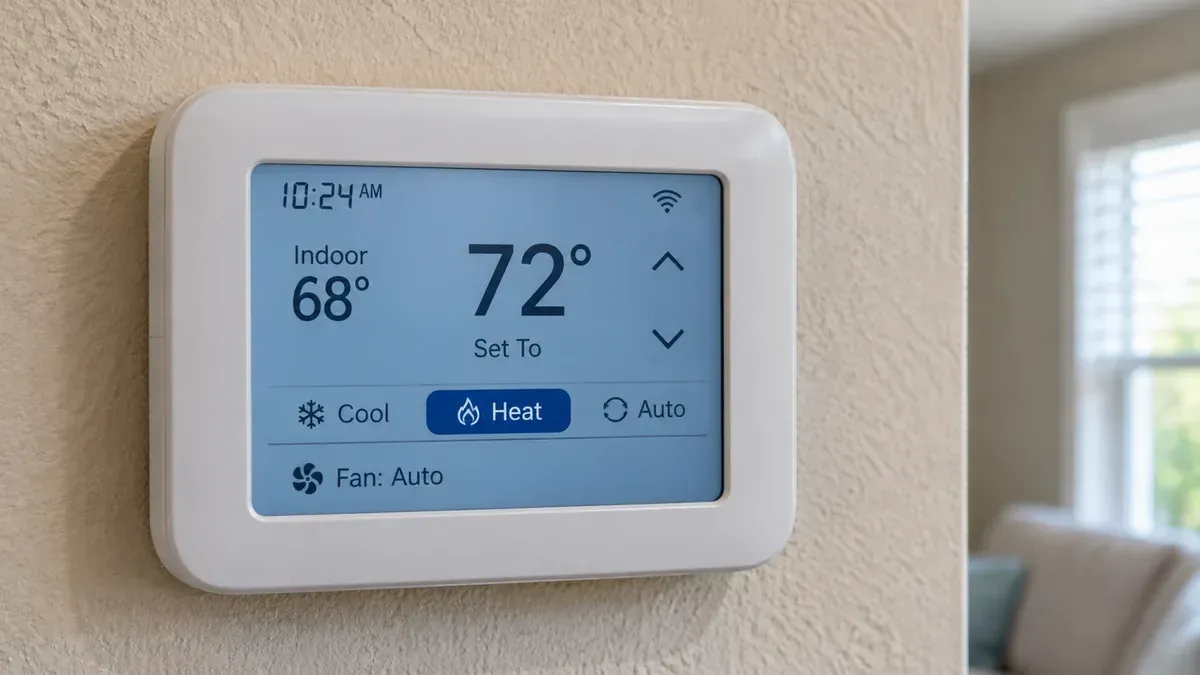
Check that the mode reads Heat rather than Cool or Off, and that the setpoint is a few degrees above the current room temperature. If you use Auto, the thermostat decides on its own when to heat and when to cool based on two separate setpoints. A heating setpoint left low from last spring, or a schedule that hasn’t been updated, can keep it in cooling or idle when you expect heat.
A Recently Installed or Reset Thermostat
If the problem started after a new thermostat went in, or after a power outage reset one, look at how it’s configured. A heat pump thermostat has to be set up as a heat pump, not as a conventional air conditioner with a furnace, and it has to know how your system’s reversing valve is wired. If either setting is wrong, the thermostat may run the outdoor unit in cooling mode every time it calls for heat. We cover that changeover setting from the cooling side in our post on an AC blowing warm air, since the same mistake works in both directions. Most thermostats show these options in an installer or equipment menu, and the manual will tell you where to find them.
When the Reversing Valve Is the Problem
If the thermostat is set up correctly and the system still won’t heat, the next suspect is the reversing valve, the part inside the outdoor unit that changes the direction refrigerant flows. An electric coil on the valve receives the thermostat’s signal and shifts it into position. When that coil burns out, the wiring to it fails, or the control board stops sending the signal, the valve stays where it is, and that’s usually the cooling position.
The valve itself can also stick. After a long summer in one position, it may not move freely when it’s finally asked to switch, and a technician can sometimes get it moving again. If the valve has failed internally, though, replacing it means recovering the refrigerant, cutting the valve out, brazing in a new one, and recharging the system, which makes it one of the larger heat pump repairs.
This isn’t something to try to fix yourself. Diagnosing it involves checking voltage at the coil, testing the coil, and comparing temperatures across the system’s refrigerant lines, all on live equipment.
What to Do in the Meantime
Because Emergency Heat bypasses the outdoor unit and uses only the backup strips in the indoor unit, it doesn’t rely on the reversing valve, which makes it a good way to keep the house warm until a repair can be made. Just expect higher electric bills while it’s on, and switch back once the system is fixed.
If Emergency Heat doesn’t produce warm air either, the problem is broader than the valve. Check the breakers for the indoor unit, since the heat strips are often on their own, and mention it when you call.
Repair or Replace?
A failed coil, a loose wire, or a control board is usually a reasonable repair on any system. A failed reversing valve on an older heat pump is a different conversation, since the repair cost can be high and the rest of the system has the same years on it. That’s a fair point to ask for a repair quote and a replacement quote side by side.
At Texas Air Repair, our EPA 608-certified technicians handle the refrigerant work a valve replacement requires, and we’ve been repairing heat pumps in the San Antonio area since 2010. You’ll see what failed and know the repair price before anything is done. When replacement is the better value, estimates for heat pump installation are free, and so is a second opinion if a different contractor has already recommended a new system.