
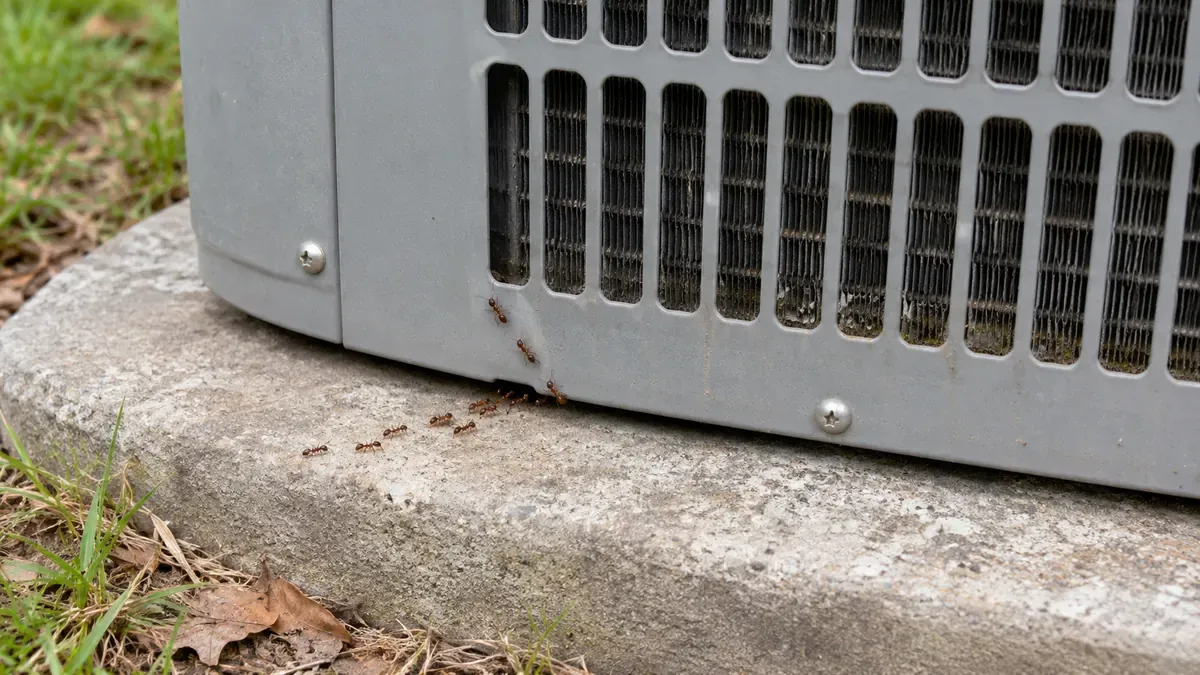
Ants move into air conditioners for shelter, and in Texas, some species are also drawn to the electrical current in the outdoor unit. Once they’re inside, they can chew wiring, pack soil into the housing, and clog the electrical switch that starts your AC, which can keep it from turning on at all. If you see ants around your outdoor unit, don’t spray it. Turn the system off, call a pest control professional to treat the ants, and have an HVAC technician check the equipment.
If your AC has stopped starting and you’ve noticed ants nearby, our AC repair technicians can inspect the unit, clean out the electrical parts, and check for damage. Here’s why this happens and how to handle it.
Why Ants Move Into AC Units
The outdoor unit is a metal housing sitting on a pad, with plenty of sheltered gaps, and that alone is enough to attract a colony. Some ants have an extra reason. Tawny crazy ants, also called Rasberry crazy ants, are drawn to electrical current, which makes the contactor and relays inside an AC an easy target. Fire ants are also known to nest in the metal housings around electrical equipment, and they’re common across Texas.
Ants that show up inside the house near the indoor unit or vents are usually following a trail from outside, and damp spots around the indoor unit can make it more appealing. We cover that in the section on ants indoors below.
What Ants Can Damage
The contactor
This is the switch that sends power to the compressor and fan. Ants that get inside it are shocked and release an alarm scent that draws more ants, and the dead ants pile up between the contacts until the switch can’t close. The result is an AC that won’t turn on.
Wiring
Ants can chew insulation, which can cause short circuits. Thermostat wiring has been damaged by ants as well.
The housing itself
Colonies can carry soil into the unit, and that soil can cause corrosion and other electrical and mechanical problems.
A short circuit can also trip the breaker, so don’t keep resetting it if you see ants around the unit. Our guide to causes of a tripped breaker covers what else to rule out.
Signs Ants Have Gotten Into Your AC
- The AC won’t start, or the outdoor unit stays silent when the thermostat is calling for cooling
- The breaker trips repeatedly
- Ants trailing up the unit, around the pad, or along the refrigerant lines
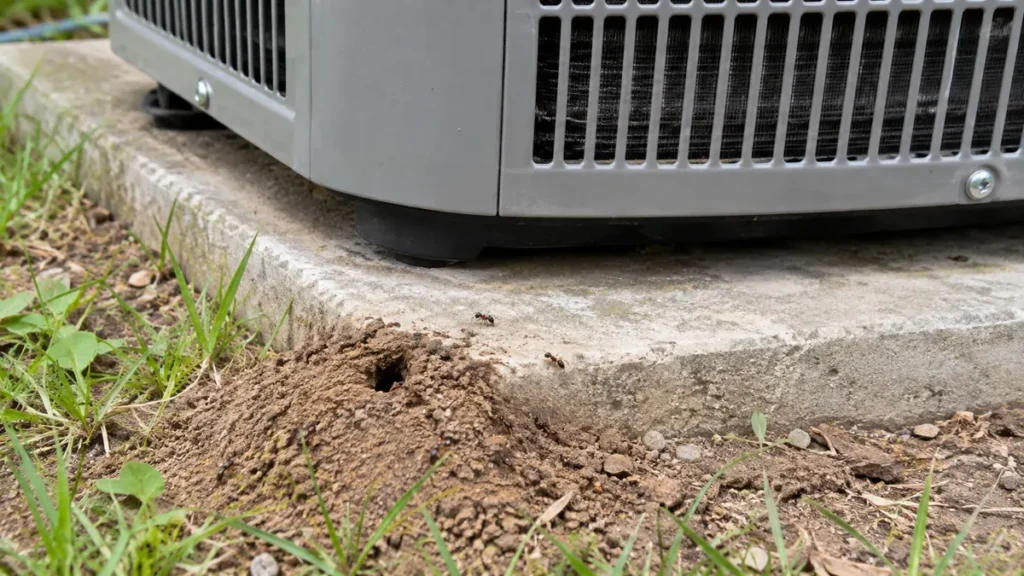
- A mound or loose soil beside or under the unit
- Ants indoors near vents or the indoor unit
What to Do First
- Turn the system off at the thermostat. If you need to be near the unit, switch off power at the breaker and the outdoor disconnect, and don’t open any panels.
- Don’t spray liquid insecticide, water, or a drench into the unit. Liquids can damage wiring insulation and make an electrical problem worse.
- Look from a distance. Fire ants sting, so don’t poke at a mound. If you can, take a photo, since treatment depends on the species and tawny crazy ants usually don’t respond to most store-bought baits and sprays.
- Call a licensed pest control professional. Treating ants inside electrical equipment takes specialized products and training.
- Have an HVAC technician clean or replace the contactor, clear soil and debris from the unit, check the wiring, and test the system. If the ants aren’t treated, they tend to come back.
Ants Inside the House Near Vents or the Indoor Unit
Ants indoors are mostly a pest control issue, but moisture near the indoor unit can draw them to it. A backed-up condensate line can leave standing water in the drain pan, so it’s worth learning the signs of a clogged drain and checking for water around the unit. If ants keep appearing at the same vent, have pest control find where they’re coming in.
How to Keep Ants Out of Your AC
- Keep plants, mulch, stored items, and debris trimmed back and cleared away from the outdoor unit.
- Fix leaks and standing water around the unit and the pad.
- Don’t move potted plants or landscaping materials from an infested area next to the unit, since that’s one way ants get spread.
- Have the electrical connections checked during a seasonal AC tune-up, where technicians assess controls, drainage, and electrical connections.
- Ask your technician about sealed contactors, which are designed to keep ants out of the switch.
The lasting fix is treating the colony itself. Cleaning a fouled contactor without treating the ants usually only buys time.
When to Call a Technician
Call if your AC won’t start, the breaker keeps tripping, or you can see ants coming and going from the outdoor unit. If it’s a hot day and your AC is down, you can get emergency air conditioner repair when you can’t wait for a regular appointment.
Texas Air Repair is a locally family-owned HVAC contractor that has served San Antonio and the surrounding communities since 2010. Call 210-380-8000 or book service online, and we’ll check your AC for ant damage.
