
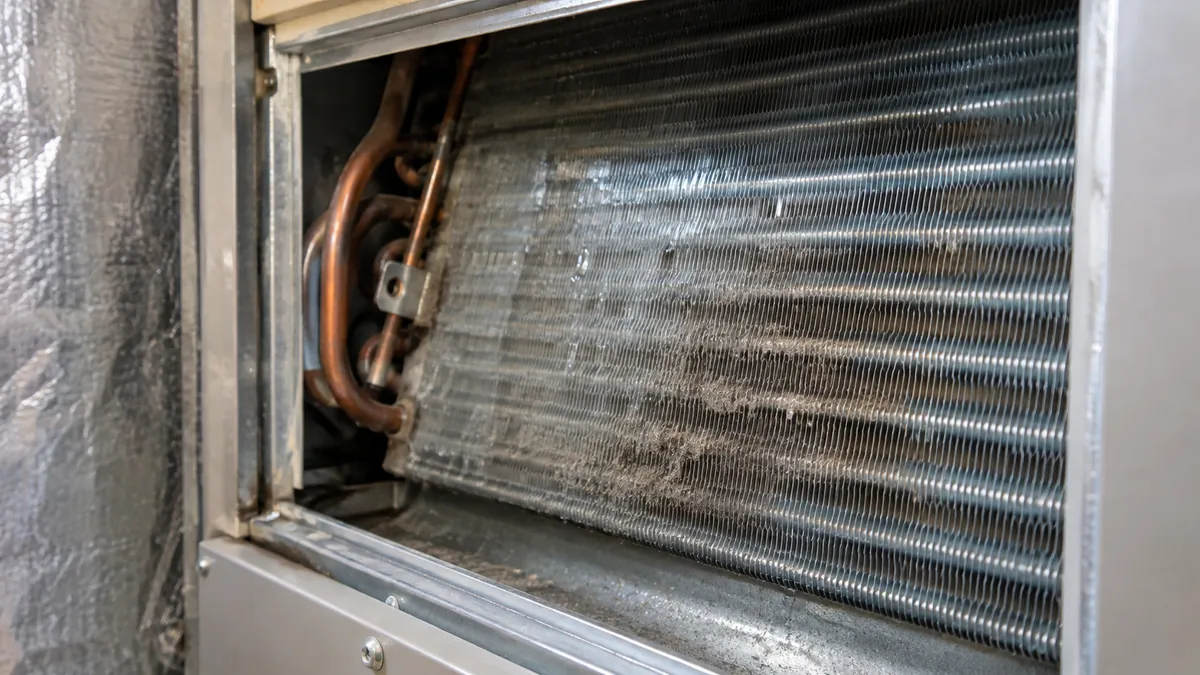
Dirty sock syndrome is the nickname for a musty, sweaty-sock smell that comes out of your vents when a heat pump or air conditioner starts up. It comes from buildup on the indoor evaporator coil, not from your ducts or anything in the house, and it rarely goes away for good until that coil is cleaned. It isn’t a safety emergency like a gas or burning smell, but it is a sign of growth inside the system that’s worth taking care of.
If you’re smelling it, our heating repair team can inspect your heat pump and find out whether the coil, the drain, or something else is behind it. The coil is part of your cooling system too, so a seasonal AC maintenance visit is a good time to have it checked and cleaned.
What Dirty Sock Syndrome Smells Like
People describe it as sour, musty, or like damp gym socks, and it usually shows up in a few predictable ways:
- It’s strongest when the system first starts, then fades once it has run for a while.
- It tends to appear when the system switches between heating and cooling, which is why it’s common in spring and fall.
- It comes from the vents throughout the house rather than from one room.
What Causes It
When your system cools, the evaporator coil collects moisture from the air, along with dust and other organic material. In a damp, warm coil and drain pan, mold, mildew, and bacteria can build up into a slimy film. HVAC professionals don’t all agree on exactly which organisms are responsible, but they agree on the source. When the system starts up, air moving across that buildup carries the odor through the ducts.
A dirty filter, a slow drain, high indoor humidity, and skipped maintenance all make it more likely. An undersized or poorly installed system can contribute as well.
Why Heat Pumps Get It Most
A heat pump runs in both heating and cooling mode, so its coil goes back and forth between wet and dry throughout the year. One explanation is that the air in heat mode isn’t hot enough to reliably kill what’s growing there, while a gas furnace runs much hotter. That’s a working theory rather than a proven fact, and an air conditioner paired with a furnace can still develop the smell. If you’re comparing equipment, our heat pump vs. furnace comparison goes through how each one heats a San Antonio home.
Is Dirty Sock Syndrome Dangerous?
It isn’t a fire or gas hazard, but it shouldn’t be ignored. The smell means microbes are growing in the system, and the odor itself can bother some people’s noses, eyes, and throats. If anyone in your home has allergies or asthma, or the smell lingers, have it looked at.
Other smells are a different story. A dusty burning smell the first time the heat comes on is usually dust burning off, and our heater burning smell guide explains how to tell that apart from something wrong. For sweet or chemical odors, see our guide to AC smells and when they’re dangerous. If you ever smell rotten eggs, that’s natural gas. Leave the house and call 911 and CPS Energy.
What You Can Do at Home
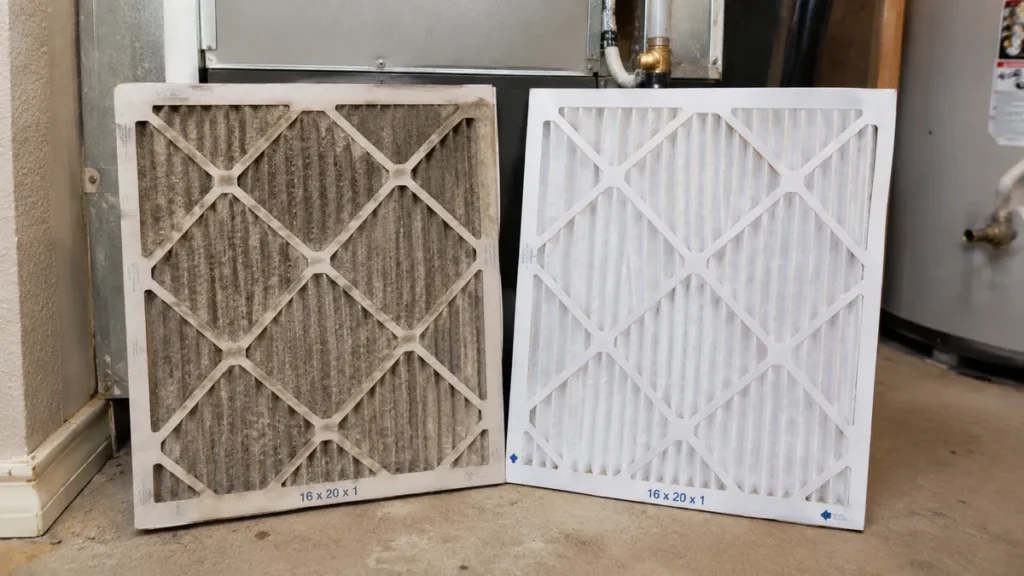
- Replace the air filter if it’s dirty, and keep a regular schedule after that.
- Check the drain pan under the indoor unit for standing water, and make sure the drain line isn’t backed up.
- Keep indoor humidity in check with ventilation or a dehumidifier.
- Leave the coil itself to a technician.
Skip the bleach and the air fresheners. Bleach can corrode the coil, anything sprayed near it can end up in the air you breathe, and fragrance only covers the smell for a day or two.
How a Technician Fixes It
The lasting fix is a thorough cleaning of the coil, the drain pan, and the blower, with the drain line checked and cleared. If the smell returns, there are a few add-ons to talk about:
- A better filter, if your system can handle one
- An anti-microbial coating on the coil
- A UV light at the coil, which needs its bulb replaced regularly
- Sealing duct leaks and addressing humidity
Coatings and cleaners wear off over time, so the smell can come back if the conditions that caused it are still there. If it keeps returning despite regular cleaning, ask about the system’s size and airflow as well.
How to Keep It From Coming Back
Change the filter on schedule, keep the drain clear, control humidity, and have the coil checked during routine maintenance before the heating and cooling seasons begin. These are the same habits that protect efficiency and extend the life of the equipment.
When to Call a Technician
Call if the smell is still there after you’ve replaced the filter, if it comes back each season, if you find water around the indoor unit, or if anyone in the home is bothered by it. A technician can tell you whether it’s the coil, the drain, or something in the ducts, and fix the right one the first time.
Texas Air Repair is a locally family-owned HVAC contractor that has served San Antonio and the surrounding communities since 2010. Call 210-380-8000 or book service online, and we’ll find out where the smell is coming from.
